Binance Pool’s scheduled access window for mining records has ended
Source report: 2026-10-13 · Editorial analysis published: 2026-11-24
The November 24 deadline concerns historical pool records. Binance’s notice describes a separate process for eligible settlements.
The records window reached its cutoff
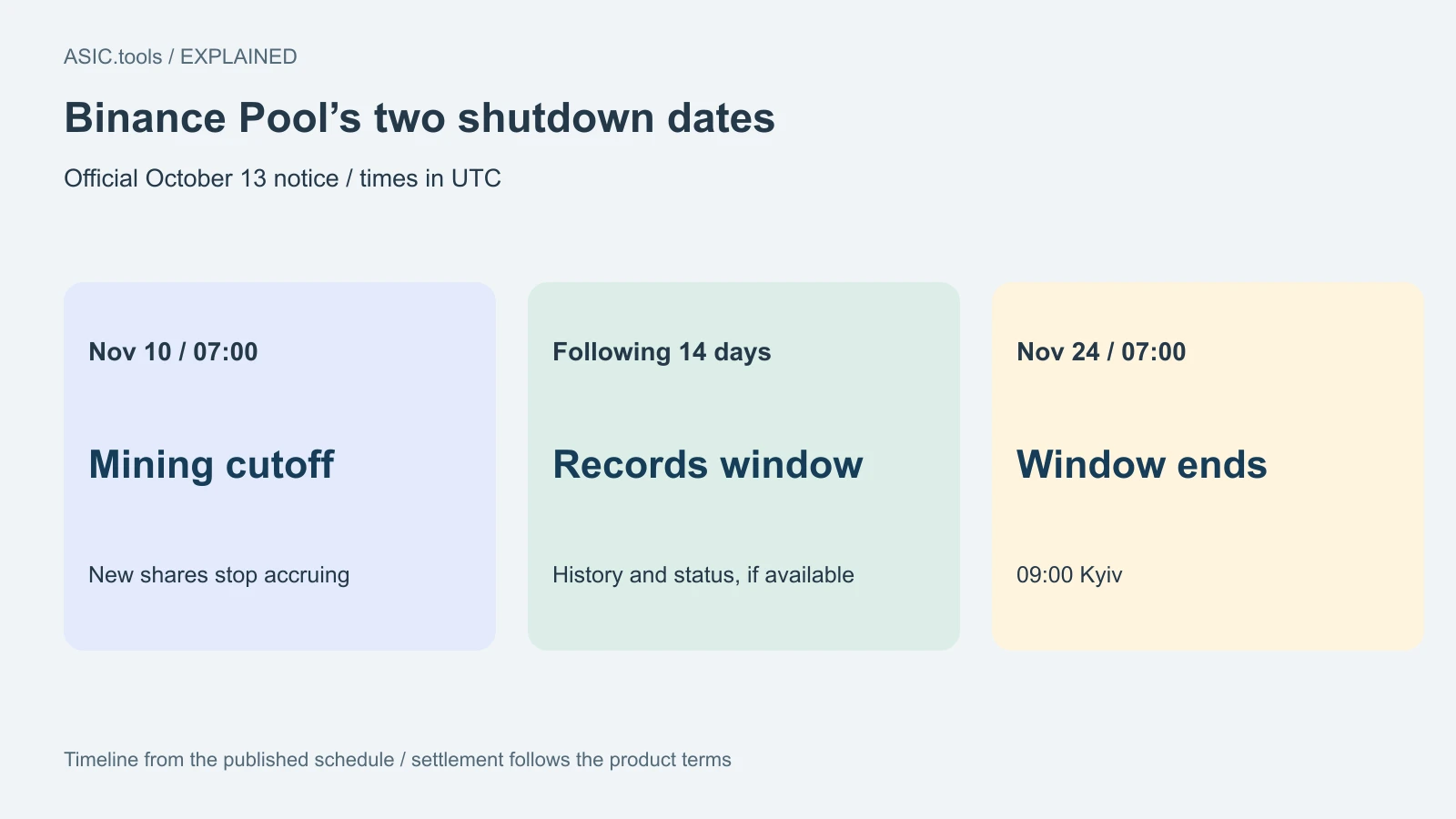
The two-week period Binance set for reviewing old Binance Pool records ended at 07:00 UTC on November 24, or 09:00 in Kyiv. The October 13 notice listed historical data, account records and payout status among the information users could view during that period, where available. Its schedule says the mining pages close after the window. Individual signed-in views and settlement status could not be independently verified.
The date follows the service cutoff on November 10 at 07:00 UTC. Under Binance’s notice, connections and new mining share credit stopped at that first cutoff, together with Pool Savings, Cloud Mining, the Transaction Accelerator and mining alerts and API features. A share is evidence that the machine completed some of the work assigned by a pool. The final period was for looking back at records from that work.
Binance said eligible work submitted before the service cutoff would count in its final calculation under pool rules. The same notice describes processing any eligible outstanding amounts, including rewards, balances, refunds or settlements, subject to product terms, account status and checks. Those conditions matter when asking about a specific amount. The expiry of the history window establishes a date for access. Progress on an eligible payment is a separate account question.
The notice had already asked affected users to complete any necessary account steps by November 10 at 23:59 UTC to facilitate payment processing. That was guidance for the earlier settlement steps. For an outstanding case, check what support says about the account now and retain the response alongside the old records.
What a public block can show
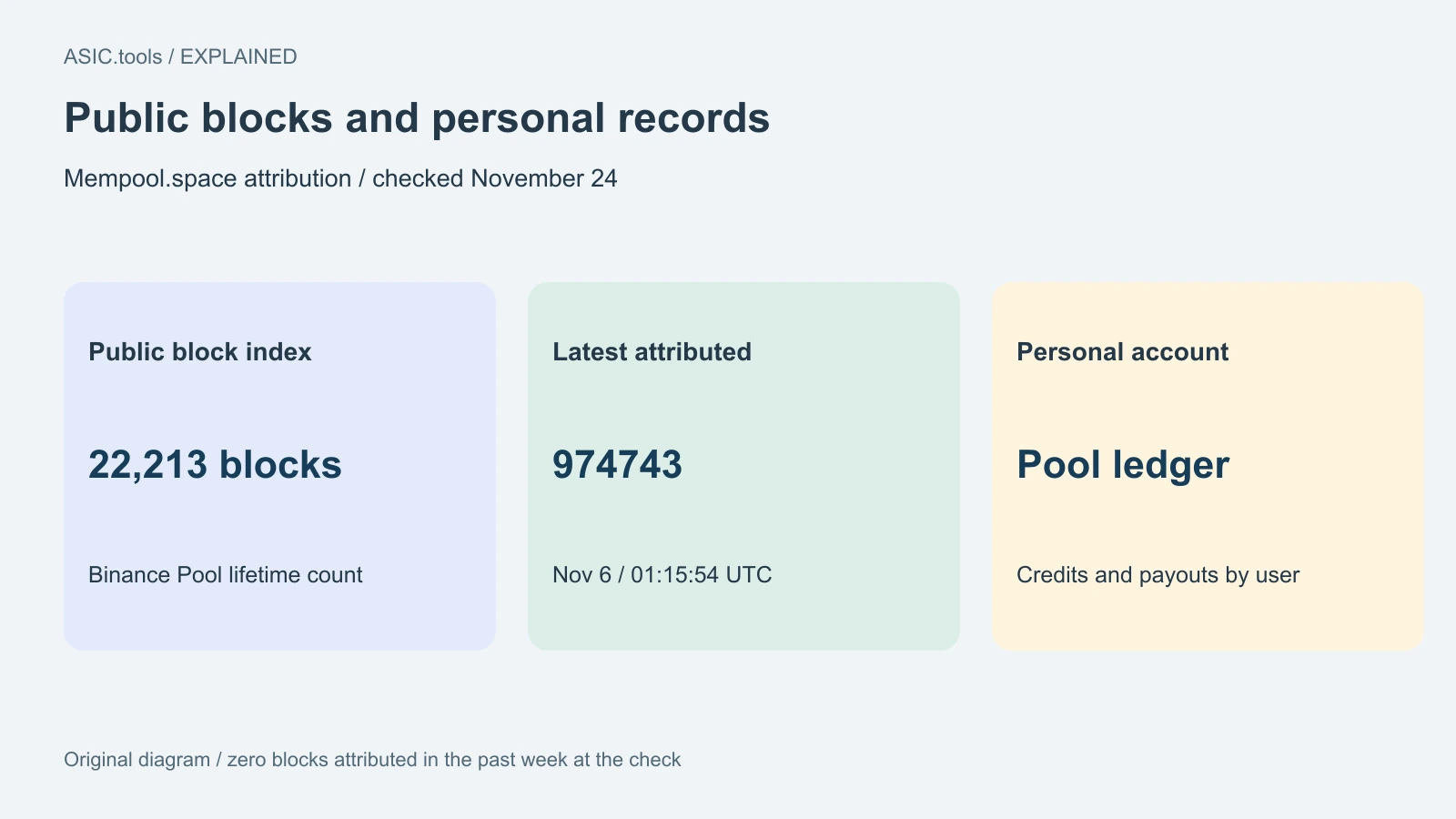
Mempool.space’s public index attributes 22,213 Bitcoin blocks to Binance Pool. Its latest listed block is 974743, with a header timestamp of November 6, 01:15:54 UTC. The index showed zero attributed blocks in the past week at the November 24 check. An explorer identifies blocks using information such as payout addresses and tags. Its counts describe the public chain as classified by that explorer.
Pools can keep detailed work records for many accounts behind one public block. A block entry can show when a pool was credited, while the pool’s own ledger tracks which worker’s shares were counted under its payout scheme. Account credits can also be internal. Where an actual withdrawal went on-chain, the transaction identifier can be used to check the amount and confirmations for that transfer. It cannot reconstruct a miner’s full share history.
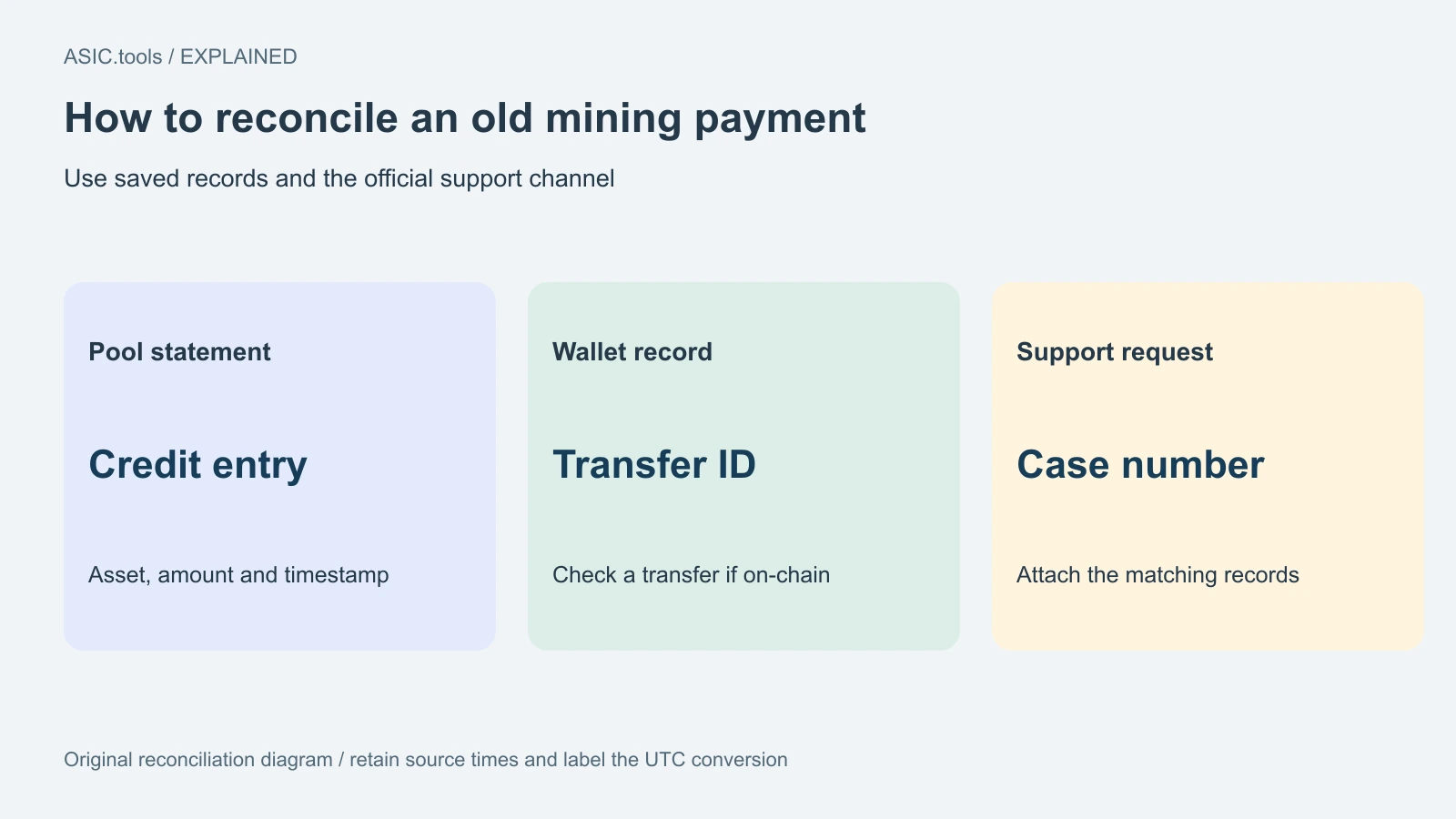
For example, a statement can show a credit in the pool account on one day and a wallet transfer later. Record both timestamps and amounts. The withdrawal transaction can confirm the second event if it was made on-chain. The first will require the statement or an account record from the platform.
If you saved an export, preserve the original and keep its time zone with it. The worker name, earned asset, reported amount and settlement identifier help connect an old statement to a wallet or exchange entry. Keep pending, paid and refunded amounts in separate rows, so an open item can be matched when a later payment appears. The original source is especially useful when two transfers have similar amounts.
How to trace an outstanding item
Binance directs unresolved questions to its official support. A former pool user can prepare the original report or screenshots, date and UTC time, asset, amount and any relevant transaction or ticket number. This makes the question concrete even when a former pool page is no longer available under the published schedule. Private login codes and wallet recovery phrases do not belong in a support request.
Use the platform’s official app or Help Center for the account conversation. Messages offering to reopen a closed mining dashboard can ask for details useful to an impersonator. A genuine settlement inquiry starts with records already in your possession and the platform’s own support route. Keep a copy of its case number along with the records, so any later response can be traced to the same inquiry.
If the date in your export is local time, retain it and label the UTC conversion in your notes. A timestamp near midnight may move to a different date after conversion. This is useful when support searches a ticket by day or when two pieces of evidence disagree about which day a transfer appears.
The latest milestone affects how former miners can retrieve history. Public block records remain useful for checking the pool’s activity, and saved account records are the practical evidence for following your own credits and payments.
Source: Binance ↗ · Binance announcement on Binance Square ↗ · Public Bitcoin blocks attributed to Binance Pool ↗ · Latest Bitcoin block attributed by Mempool.space ↗
Mining calculator ↗