Amazon backs a 960 MW nuclear plan in Indiana: who would pay for the power?
Source report: 2026-10-19 · Editorial analysis published: 2026-10-20
Amazon, AEP and X-energy are exploring 12 small reactors at a former coal site. The project is about future supply and long-term contracts, not an immediate cut in electricity bills.
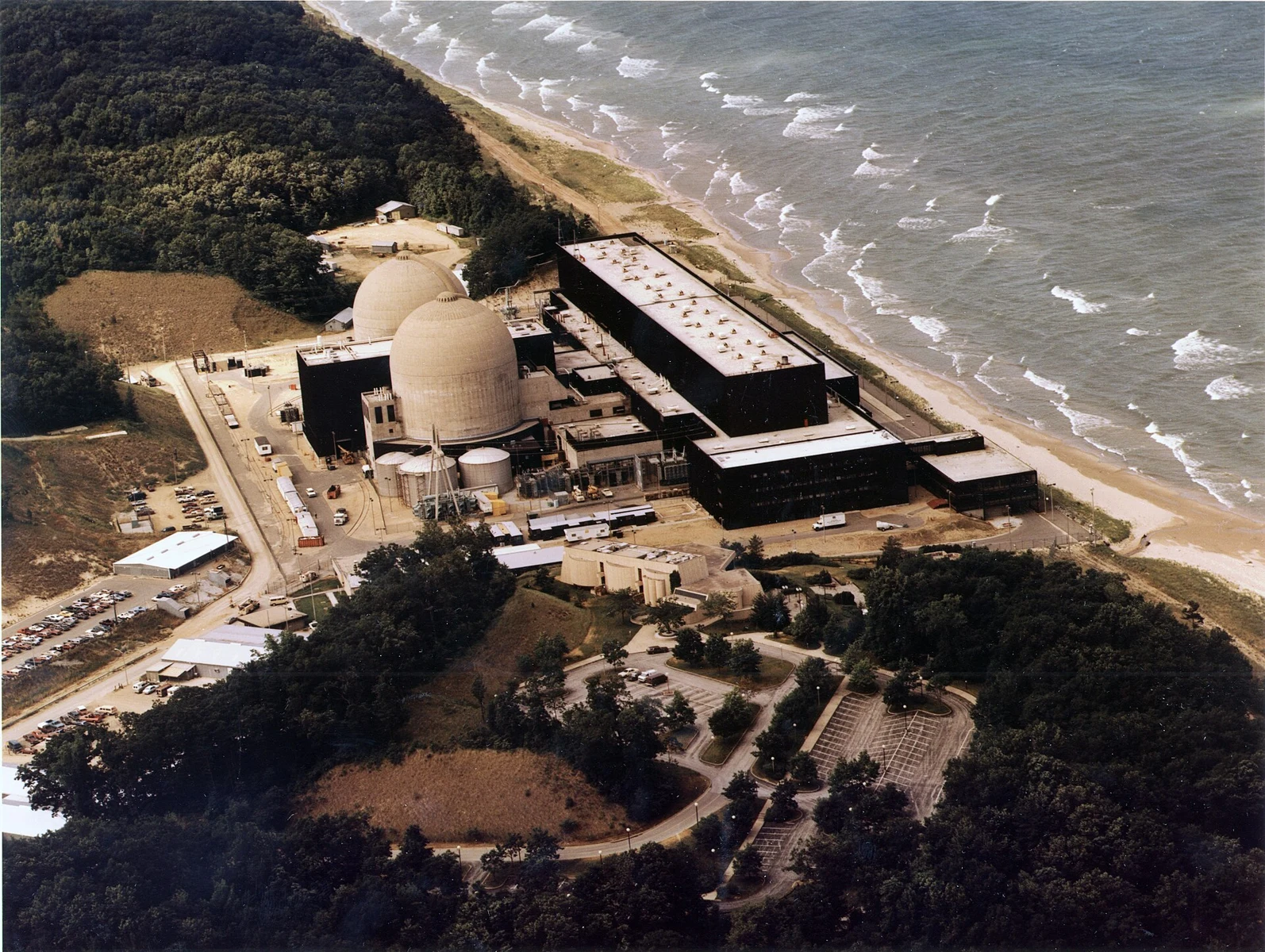
A former coal site could get a very different future
Amazon, American Electric Power and X-energy announced an Indiana nuclear development plan on October 19. The partners are exploring 12 small modular reactors at the former Breed Generating Station site in Sullivan County. The target is 960 megawatts of new electrical capacity serving the regional grid and Amazon’s data centres.
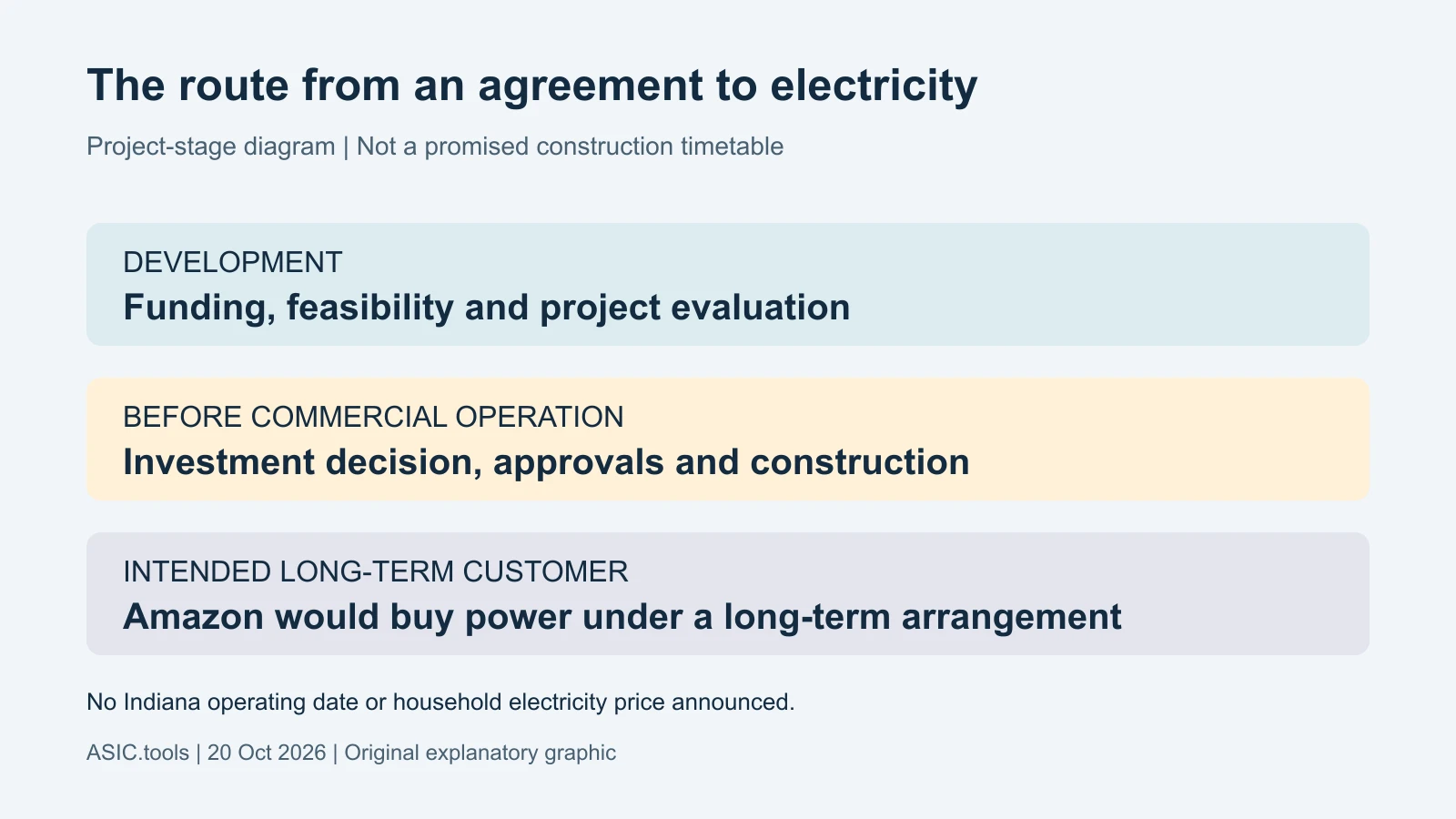
For people who pay an electricity bill, the important questions are familiar: will there be enough power, when will it arrive, and who pays for it? The agreement begins project development. It does not mean that the reactors are already producing energy or that a new household tariff has taken effect.
What “small modular” means here
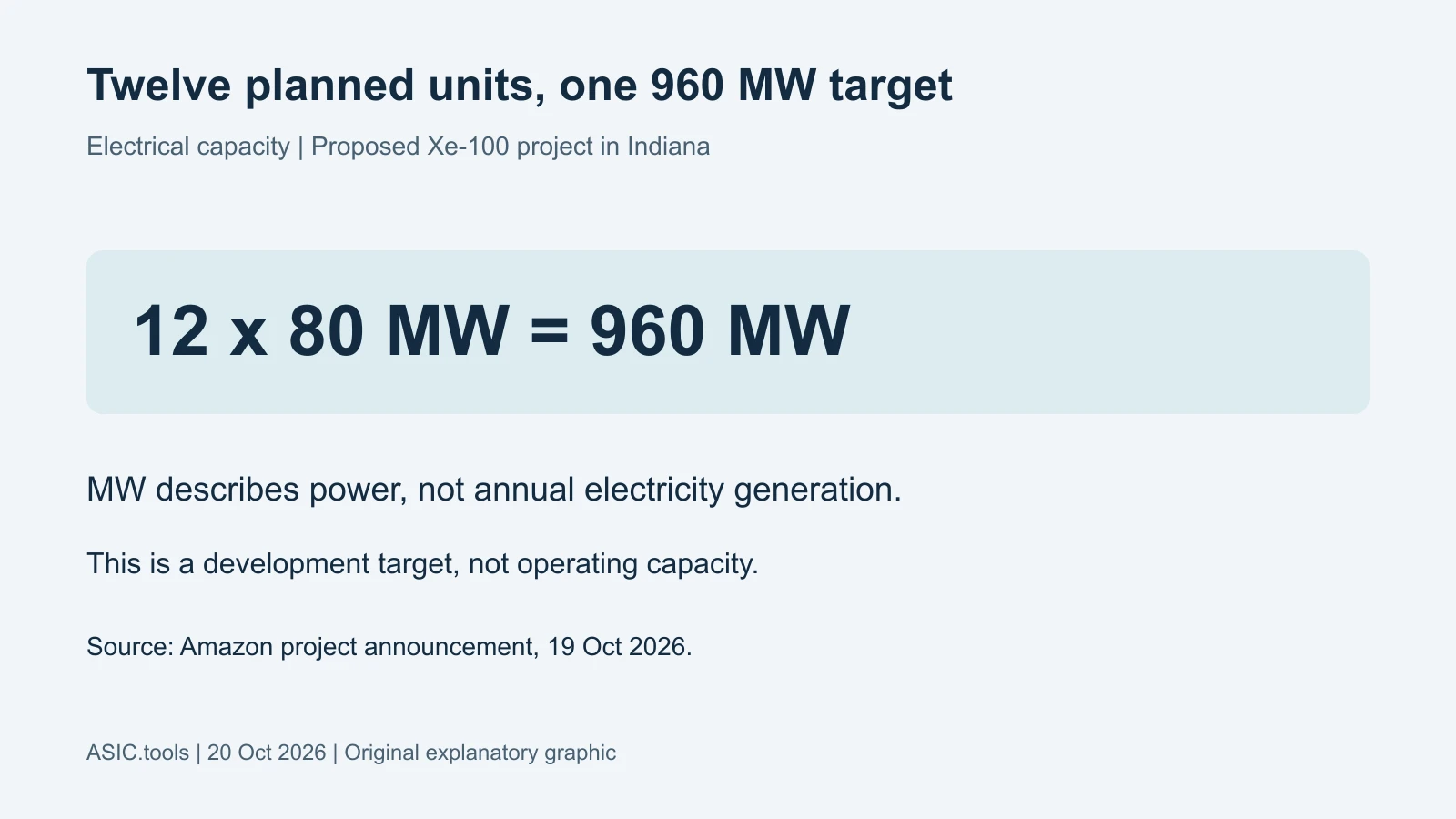
An SMR is a small modular reactor: a nuclear generating unit intended to be built and combined in a more modular way than a single very large reactor. Small is a comparison with traditional nuclear units, not a claim that the equipment fits in a garage. Amazon lists each proposed Xe-100 unit at 80 MW; twelve times 80 gives the 960 MW project target.
Megawatts measure power, or the rate at which energy can be supplied. They do not tell us annual electricity output without knowing operating hours and performance. Adding the twelve units on paper also does not establish how many households or mining machines will receive their output; the eventual delivery arrangements and other grid users matter.
Why Amazon is involved
Amazon would fund project development and be the first customer to buy power once the plant is operating. AEP says the intended long-term purchase contract would cover the facility and operating costs for its duration if the project reaches a final investment decision, construction and commercial operation. Those steps remain ahead.
A long-term electricity buyer can make an expensive project easier to finance because it provides an expected customer for future production. This is different from a company buying spare power for a few hours. It helps explain why data-centre operators are appearing in power-generation announcements as their demand grows.
The electricity-bill question
AEP presents affordability protections for existing customers as central to the agreement. Amazon also points to its commitment to cover the electricity and additional infrastructure costs of its data centres. These are the companies’ commitments and descriptions of the proposed arrangement, not an independently calculated saving for every resident.
Amazon’s announcement refers separately to a planned residential-rate reduction starting in 2027 and an earlier base-rate cut. Those references should not be treated as electricity already produced by the proposed reactors. A customer’s full bill depends on the utility, tariff, usage and other charges; a generation announcement alone cannot tell a reader how much their next bill will change.
What it has to do with mining
A mining farm and an AI data centre both need electricity and grid access, even though their computers perform very different work. A large prospective buyer making long-term supply arrangements is therefore relevant to the infrastructure miners also depend on. New generation can expand supply, but its location, delivery and price determine who can actually use it.
For a home miner, this is not a newly available cheap hosting offer or a reason to change the electricity price in a calculator. It is a sign of how major computing customers are seeking future supply. Keep using the tariff that actually applies to the machine, including relevant network charges and any separate cooling consumption.
A project to watch through concrete milestones
Amazon describes Indiana as the second project in its wider collaboration with X-energy, which aims for more than 5 GW of new US nuclear capacity by 2039. That broader goal is not a confirmed start date for this 960 MW plant. The announcement does not give readers an operating date or a retail electricity price for the Indiana facility.
The next meaningful updates will be progress on feasibility, investment, approvals, construction and a defined supply timetable. Until then, the accurate reading is a funded development effort and an intended long-term customer. It may become important electricity infrastructure, but households and miners still need evidence of actual operation before building today’s budget around it.
Source: Amazon / AEP ↗ · AEP project announcement ↗
Mining calculator ↗