TSMC reports NT$511.86 billion in September revenue: context for ASIC supply
Source report: 2026-10-08 · Editorial analysis published: 2026-10-09
The October 8 report shows strong annual revenue growth. It does not disclose mining-chip orders, ASIC delivery dates or the performance of a new miner.
Analysis and practical implications
This section is our analysis and illustrative calculations, separate from the source report.
A dated foundry report, with a clear currency
TSMC published its September 2026 revenue report on October 8. Consolidated net revenue was approximately NT$511.86 billion, down 0.6% from August and up 54.6% from September 2025. Revenue for January through September reached NT$3,898.73 billion, up 41.1% from the corresponding period last year. NT$ denotes New Taiwan dollars. These figures are consolidated revenue, not US-dollar revenue, net profit or an estimate of the number of Bitcoin-mining chips manufactured.
For the ASIC market, this is relevant semiconductor supply-chain context. The release does not provide a mining-specific breakdown, name a new miner or establish that a particular equipment supplier has secured a manufacturing allocation. Our analysis focuses on how to use a broad foundry report without turning it into a product announcement. Buying decisions still require documentation for the actual machine, its availability and its supported operating conditions.
Growth rates describe different comparisons
A month-over-month comparison and a year-over-year comparison answer different questions. A small decline from the previous month can coexist with a large increase over the same month a year earlier. The figures do not contradict each other, and the two percentages should not be added together. The year-to-date comparison describes a longer period again, so it cannot be substituted for the growth of September alone or described as a full-year result.
When maintaining a supply-chain dashboard, keep the reporting period next to the number. A September observation belongs with September, even though the press release appeared in October. The source date is useful for checking freshness, while the period date identifies the business activity being measured. Keeping both dates prevents a chart from shifting one month forward simply because the publisher reports after month-end, and prevents a nine-month total from being shown beside a single-month total without explanation.
Foundry revenue is not a shipment counter
Revenue is a monetary measure. Its movement can reflect changes in the mix and pricing of products and services as well as the amount of work performed. The short release does not separate those contributions. Without quantities, product categories and their accounting basis, dividing revenue by an assumed wafer price creates an unsupported estimate. It would be even less defensible to divide by an imagined mining-chip price and call the result the number of new ASICs entering the market.
A complete miner is also more than a semiconductor die. Boards, packaging, power supplies, cooling components, firmware, assembly and testing contribute to the delivered system. Availability at one stage of that chain does not guarantee availability at all others. An operator evaluating a purchase should therefore track the supplier’s actual delivery commitment and configuration, rather than treating a strong foundry revenue month as confirmation that a finished miner will arrive on schedule.
Process-node labels do not define mining efficiency
A smaller process-node label can be part of a chip’s technical description, but it does not establish the efficiency of a complete mining machine. For an ASIC, compare the named algorithm, measured hashrate and electrical power at the stated operating profile. Units matter: Bitcoin SHA-256 performance and a different algorithm’s performance cannot be ranked simply because both appear under a hashrate heading. A chip-manufacturing headline supplies none of the missing operating measurements.
For illustration, a hypothetical SHA-256 miner drawing 3,000 W while producing 200 TH/s has an efficiency of 15 J/TH: divide power by hashrate using compatible units. This is an arithmetic example, not a TSMC specification or a newly announced device. The farm’s own power meter may also include cooling and distribution losses, so system efficiency and device efficiency need separately defined measurement boundaries. A useful comparison states which boundary was used before declaring one installation superior.
An order, a preorder and a shipment are different
A supplier can announce a design, accept a preorder or ship equipment at different points in time. A broad foundry revenue report does not resolve which point a mining product has reached. Evidence of a finished machine should include an exact model and configuration, a dated specification and a clearly described availability status. If a listing presents several operating modes, the advertised hashrate and power must come from the same mode rather than combining the best figure from each.
For purchasing records, save the agreed model, quantity, shipping window and the document version used to evaluate it. A later product-page edit can otherwise leave the buyer comparing delivered hardware with a different specification. This is particularly relevant where equipment names stay similar across revisions. The report can be part of a wider market review, but it should not replace the purchase document or make an uncertain delivery date appear confirmed.
What an ASIC buyer can actually verify
A practical hardware check starts with documentation that identifies the receiving machine. Confirm input voltage and connector requirements, cooling type, supported coolant or airflow conditions, management access and the relevant firmware branch. These details connect a specification with a workable installation. An efficient ASIC can still be unsuitable for a farm if its electrical or cooling requirements cannot be met. None of those compatibility questions is answered by the monthly revenue total.
The download record should also identify the manufacturer or authorized software source, supported model, version and any published integrity checks. Similarly, an instruction manual for a related family is useful context but should be labelled as related-family documentation. Treat these as compatibility decisions for the specific hardware, rather than inferring support because two products share a chip supplier or a broadly similar product name. This keeps catalogue information useful even while the wider semiconductor market changes.
Turning a market headline into a farm scenario
The direct operating inputs for a profitability scenario are the miner’s useful hashrate, electrical consumption, tariff, pool charges, availability and the relevant revenue assumption. A foundry’s revenue growth rate is not one of those inputs. Applying it to a miner’s expected daily income would mix two unrelated measurements. Nor does the announcement provide a dated ASIC price, so it cannot establish that a purchase has become cheaper or that a particular payback period has improved.
If the hardware has not arrived, keep the proposed deployment separate from the operating fleet. That distinction prevents expected machines from contributing income to an account of actual production. Once equipment is installed, replace quoted power and availability with observations taken over an appropriate operating interval. This is our suggested workflow for using market information alongside a calculator: the headline explains an industry backdrop, while the scenario remains tied to the machine and electricity contract the user can actually document.
What later disclosures would add
A more detailed earnings discussion could provide additional context for the company’s business mix and manufacturing plans. A separate equipment-manufacturer release could establish a new mining product. Until those documents exist, the September report supports the reported consolidated figures and their dated comparisons. It does not justify a claim about crypto-mining demand, reserved wafers, a customer’s delivery priority or the date of the next ASIC generation.
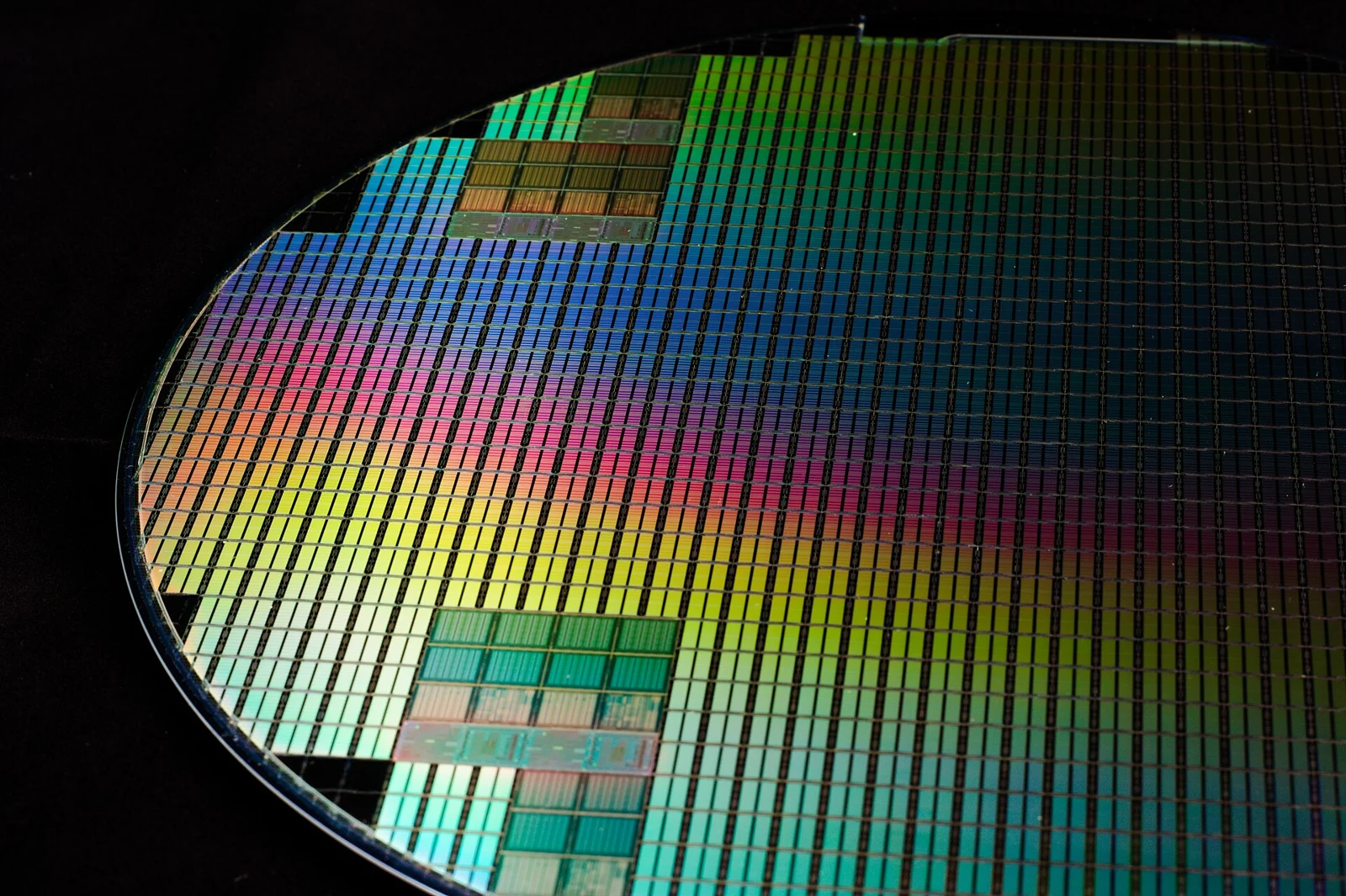
The accompanying licensed archival images show semiconductor materials and a wafer-research environment. They are contextual photographs, not evidence of TSMC’s September production or an undisclosed mining chip. For readers following ASIC supply, the useful distinction is between a semiconductor-industry signal and verified product evidence. Record the first as context, and require the second before changing a model’s specifications, release status or delivery assumptions in the farm plan.
Source: TSMC ↗
Mining calculator ↗