Pirate Chain updates wallet syncing: what version 6.0.14 fixes
Source report: 2026-10-21 · Editorial analysis published: 2026-10-22
The new recommended release tackles stalled synchronization and stale wallet transaction data. Its notes keep the earlier mandatory security upgrade separate.
A wallet that looks stuck needs a closer look
Pirate Chain’s developers published version 6.0.14-b14db80 at 23:20 UTC on October 21, already October 22 in Kyiv. The new release aims to make nodes follow the current blockchain more reliably and fixes how the blockchain bootstrap rebuilds wallet transaction data. It matters to wallet users, miners and services that depend on an up-to-date node.
A node is software that downloads and checks blockchain information. If it stops learning about new blocks, the screen can lag behind the network. That is a synchronization problem; a stale display alone is not evidence that coins have disappeared or that a new theft has occurred.
Recommended now; the security baseline is separate
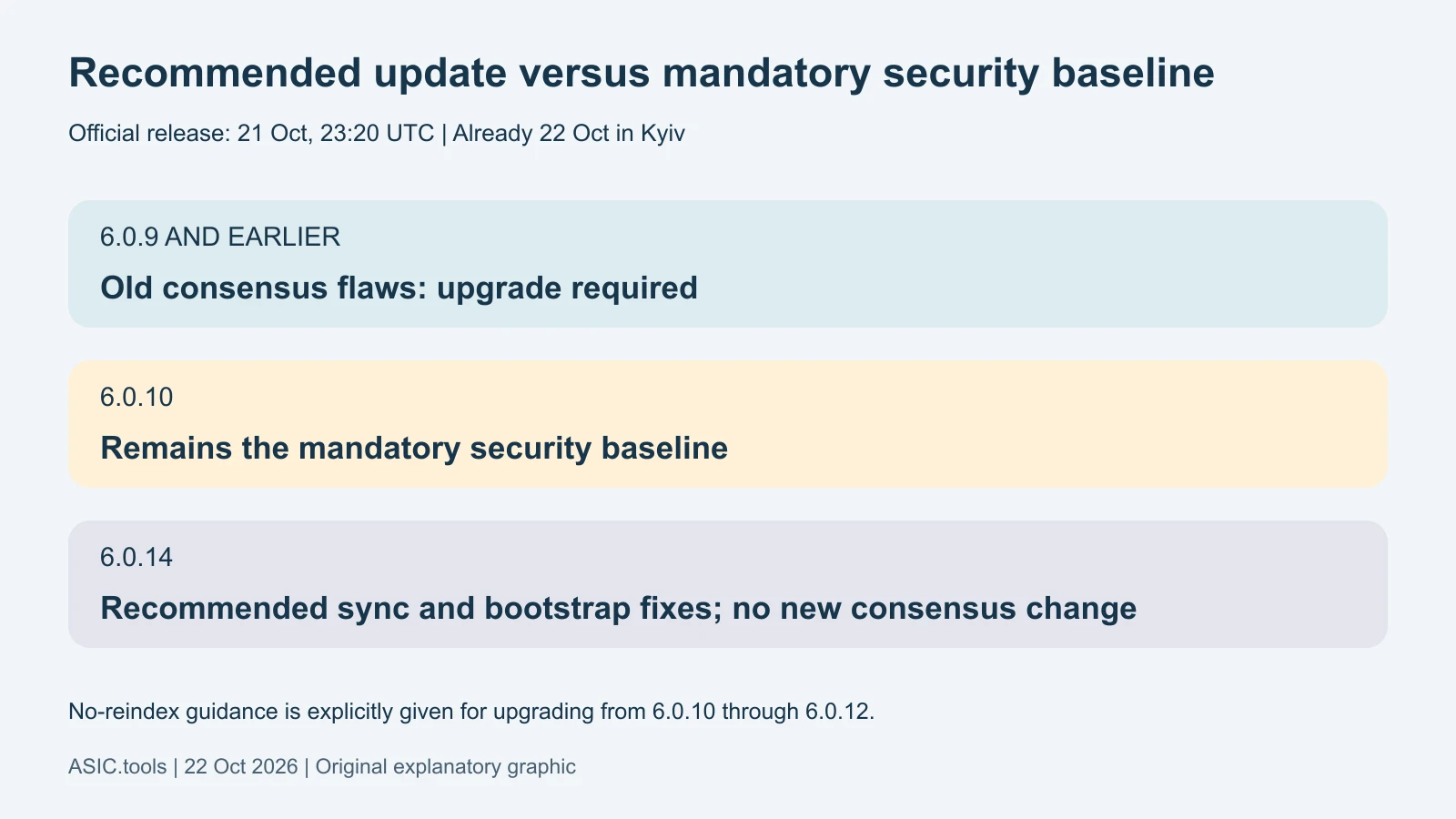
The developers label 6.0.14 a recommended update for every node. Their notes explicitly say 6.0.10 remains the mandatory security release. The newer number should not be reported as a newly announced mandatory hard fork: 6.0.14 makes no consensus-rule change or block-index-format change of its own.
The earlier 6.0.10 notes explain that versions 6.0.9 and below can accept invalid transactions into blocks and follow an invalid chain. That warning applies to the old software baseline. The new release builds on that protection and improves operation; it is important to know which version is actually installed before interpreting upgrade instructions.
Why one peer could hold things up
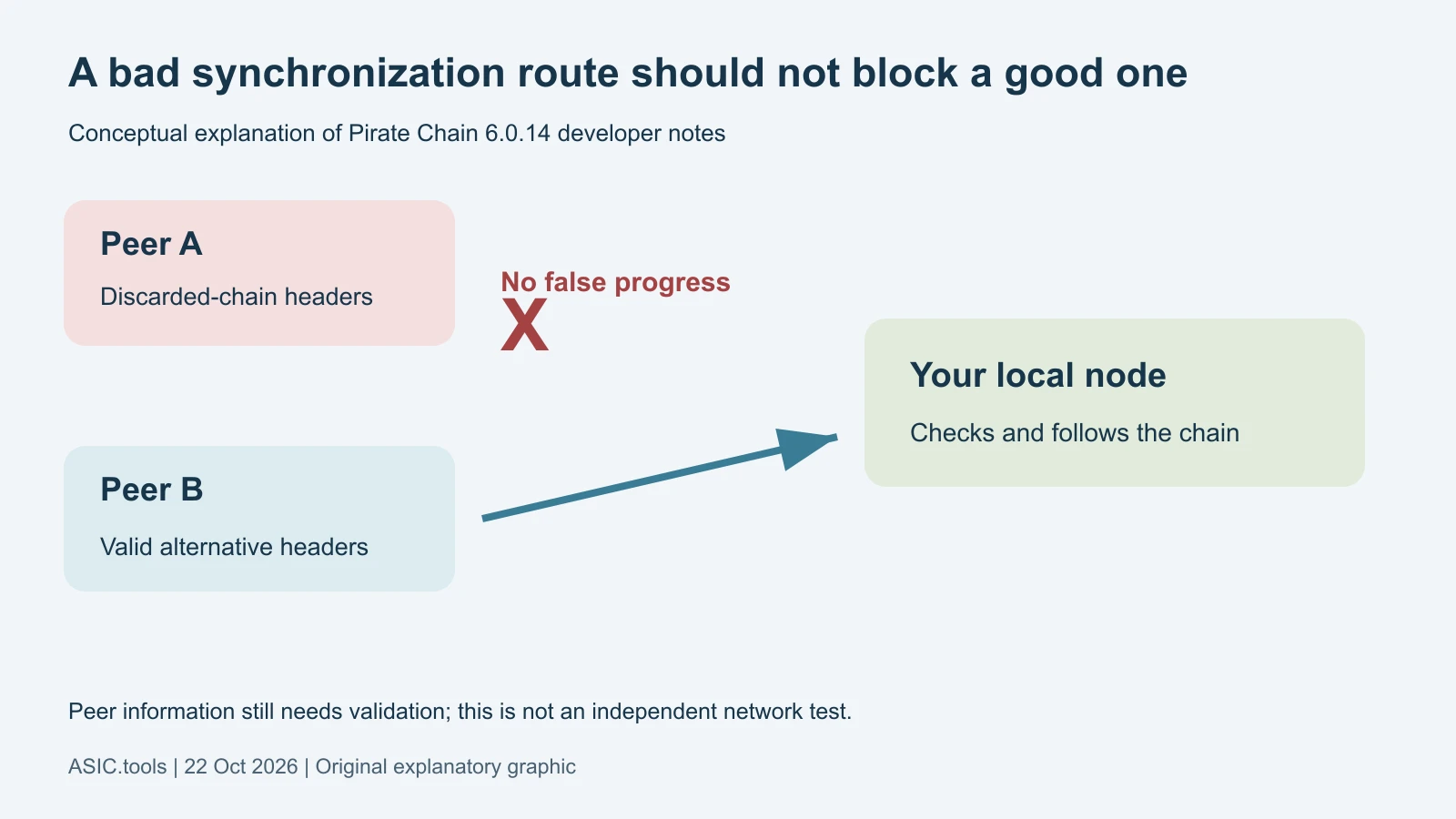
Nodes exchange block headers with peers. A header is a compact summary used to learn about blocks before downloading their full contents. The release improves request handling so a peer repeatedly offering headers from a chain the node has already discarded no longer counts as useful synchronization progress.
It also preserves a fallback when a peer’s higher-work announced chain proves invalid. In plain language, one bad route should not keep hiding a valid route reported by another connection. These are developers’ stated fixes, not a claim that this report has independently tested every network condition.
The node now asks again when it falls behind
After initial synchronization, a node normally hears about new blocks from connected peers. If those announcements stop, the current version can notice that its tip has not advanced for several block intervals and actively ask for newer headers. The tip is simply the latest block the local node currently knows.
That recovery behaviour stays dormant when the node is current, according to the notes. The aim is to avoid waiting indefinitely after missed announcements. It is not a change to mining rewards, hardware hashrate or the monetary value of ARRR, and it does not by itself prove that a pool payment has been sent.
What the bootstrap correction actually rebuilds
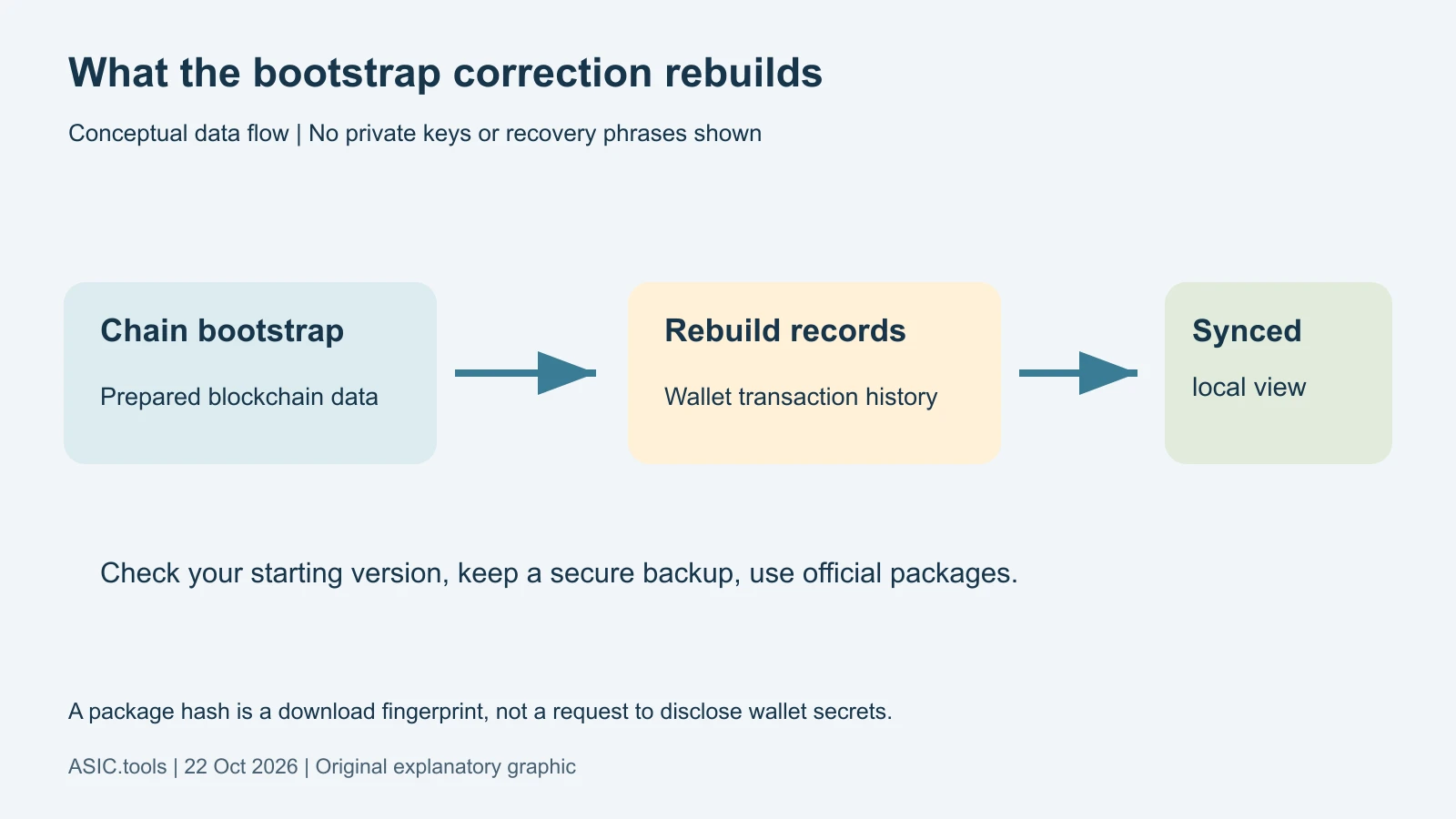
A blockchain bootstrap supplies a prepared copy of chain data to help a node catch up. The developers say an incorrect internal option previously prevented the intended clearing of wallet transactions, potentially leaving stale entries from the earlier chain. The corrected procedure rebuilds transaction information from the bootstrapped chain, including shielded state.
This concerns the wallet’s view of chain activity. It is not a request to reveal a recovery phrase to support, and this article does not instruct users to erase their private keys. Check the official release instructions and keep a secure wallet backup before maintaining software that holds your own keys.
Read the reindex instruction for your starting version
For upgrades from 6.0.10 through 6.0.12, the new notes say no reindex or configuration change is required: stop the old node, install the new version and restart. Reindexing means rebuilding the local block index. The older mandatory security upgrade has its own automatic one-time rebuild, so the no-reindex statement should not be applied indiscriminately to every older version.
Use the official release page and its published package hashes for the correct platform. A hash is a file fingerprint that helps check a download against the publisher’s value.
Source: Pirate Chain developers ↗ · Version-pinned 6.0.14 release notes ↗ · 6.0.10 mandatory security baseline notes ↗
Mining calculator ↗