
May’s rally fades before month-end
Source report: 2026-06-05 · Editorial analysis published: 2026-09-10
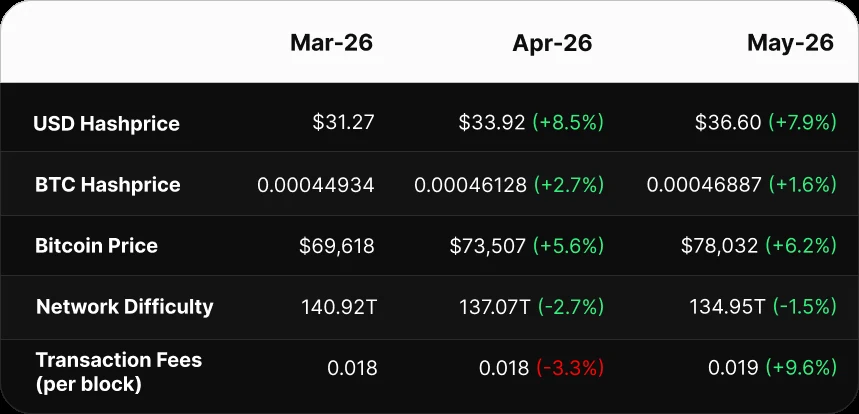
Average May hashprice reached $36.60 per PH/s/day, up 7.9%, although the month ended below its early peak, Luxor reports.

Analysis and practical implications
This section is our analysis and illustrative calculations, separate from the source report.
A strong average can coexist with a weak finish
A monthly average includes the entire observation period. A month can therefore show an improved average while ending below an earlier peak. That is not a contradiction: the average describes the path through the month, while the closing value describes one endpoint.
For an operator reviewing an electricity invoice, the daily path matters. Align receipts with operating time and consumption rather than applying the closing observation to every day. This is particularly important if the fleet changed settings or was offline during part of the month.
Reconcile the fleet before interpreting the market
A monthly comparison should record changes in the number of machines, their operating profiles and maintenance activity. More receipts can result from additional equipment rather than better market conditions. Lower consumption can result from downtime rather than improved efficiency.
Keep those operational changes visible in the review. A useful record separates total receipts from receipts per unit of accepted work and separates total energy from the energy used by each operating group. That structure makes the market contribution easier to identify.
Avoid buying equipment from one favorable interval
An attractive period can make a simple payback calculation look much shorter. The calculation should still be tested under less favorable revenue conditions and realistic downtime. Equipment remains exposed to operating expenses after the favorable interval ends.
Compare installed cost, efficiency, service condition and available power rather than ranking offers solely by their apparent payback at a recent peak. The objective is a machine that fits the site's constraints across a range of conditions, not one that only looks compelling in a selected historical window.
Use the review to improve the next month’s process
Identify which costs and operating problems were controllable. Address recurring downtime, incomplete records and unexplained deviations between local output and pool-accepted work. Those improvements remain useful whether the market strengthens or weakens.
The historical report provides context for this review. The site's own records explain how that context translated into actual results. Keeping the two levels separate produces a more reliable operating picture than using a market headline as a substitute for reconciliation.
Source: Hashrate Index / Luxor ↗
Mining calculator ↗