Finding the electricity break-even point
Source report: 2026-08-02 · Editorial analysis published: 2026-09-10
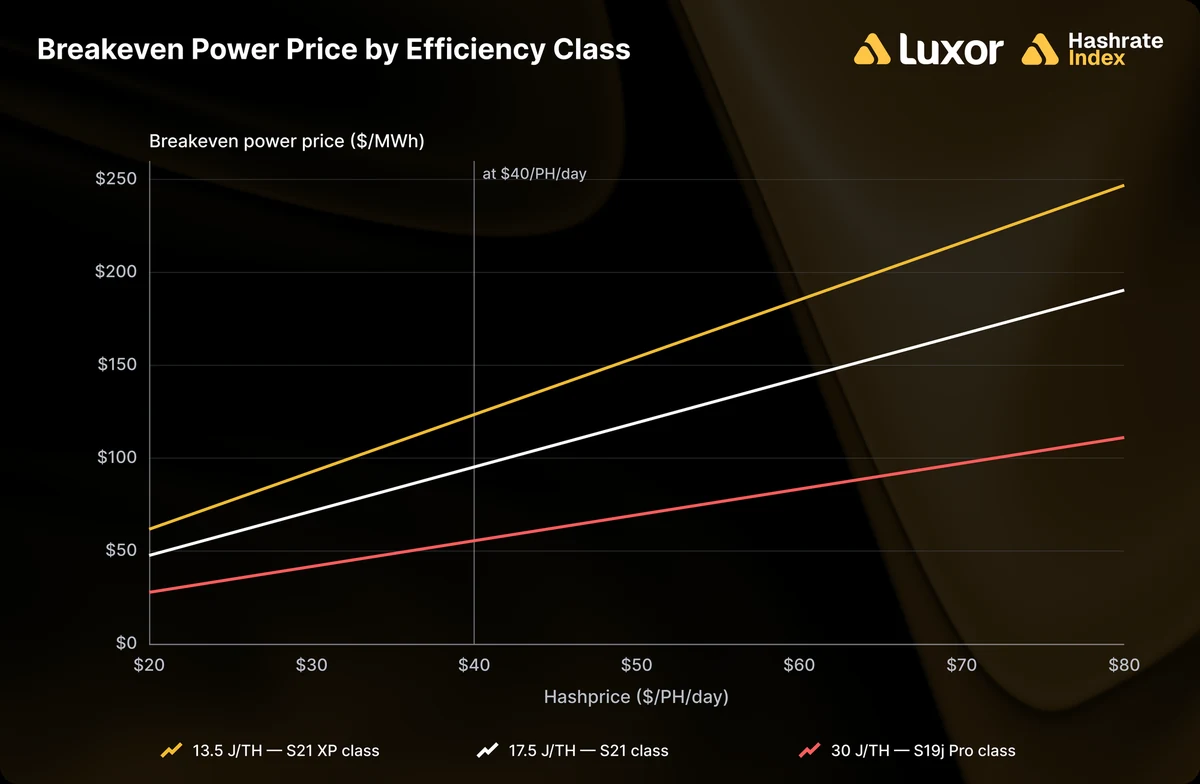
Hashprice and hardware efficiency define the operating electricity threshold. Pool fees and other expenses lower the practical break-even tariff.
Analysis and practical implications
This section is our analysis and illustrative calculations, separate from the source report.
Break-even is a boundary, not a comfortable target
An electricity break-even calculation estimates the rate at which mining receipts are exhausted by the electricity used to generate them. It is a useful control signal, but it is not the same as full business profitability. A machine operating exactly at that boundary has no remaining contribution toward repairs, rent, financing or the purchase price.
Keep the scope of the calculation visible. State whether pool fees are included, whether auxiliary cooling is counted and whether the model assumes continuous operation. Otherwise two operators may quote different break-even tariffs while both are calculating correctly under different assumptions.
Calculate the boundary from a consistent scenario
Take a hypothetical 200 TH/s machine drawing 3000 watts and a gross hashprice of 35 dollars per PH/s per day. Gross daily revenue is 0.2 multiplied by 35, or 7 dollars. Electricity consumption is 72 kWh per day. Before fees and other expenses, the simple electricity boundary is therefore about 0.0972 dollars per kWh.
If an assumed pool fee of 2% is deducted, the available revenue becomes 6.86 dollars and the boundary falls to about 0.0953 dollars per kWh. This example is not a forecast. It illustrates why a fee that looks small should not be omitted when a site operates close to its electricity limit.
A changing tariff requires a time-based calculation
With a variable electricity tariff, the average price can conceal expensive hours. A machine may contribute positively during one part of the day and negatively during another. Compare the expected receipts for each operating interval with the electricity price applicable to that interval.
Do not ignore the transition between intervals. Restart delays, unstable machines and operational restrictions may make frequent switching less attractive than a simple hourly spreadsheet suggests. Add a practical margin and a minimum operating period to the decision process if the equipment or commercial arrangement requires them.
Use the threshold to prioritize actions
A site near its boundary can investigate lower-power profiles, better cooling operation, avoidable fees and maintenance issues that reduce accepted work. Measure each change rather than assuming that a lower displayed power value automatically improves the economics.
Keep a historical record of the threshold alongside the actual tariff. This shows whether a weak result came from market conditions, electricity cost or equipment behavior. The useful outcome is a repeatable operating rule with known limitations, not a single tariff copied from a calculator and treated as permanent.
Source: Hashrate Index / Luxor ↗
Mining calculator ↗