A giant data centre plans its own power: Oracle says households will not fund it
Source report: 2026-10-22 · Editorial analysis published: 2026-10-23
Oracle’s October 22 plan for Project Jupiter uses Bloom fuel cells and a private microgrid. The promise about who pays is separate from proof of actual bills, emissions or operating capacity.
The question behind the announcement: who pays?
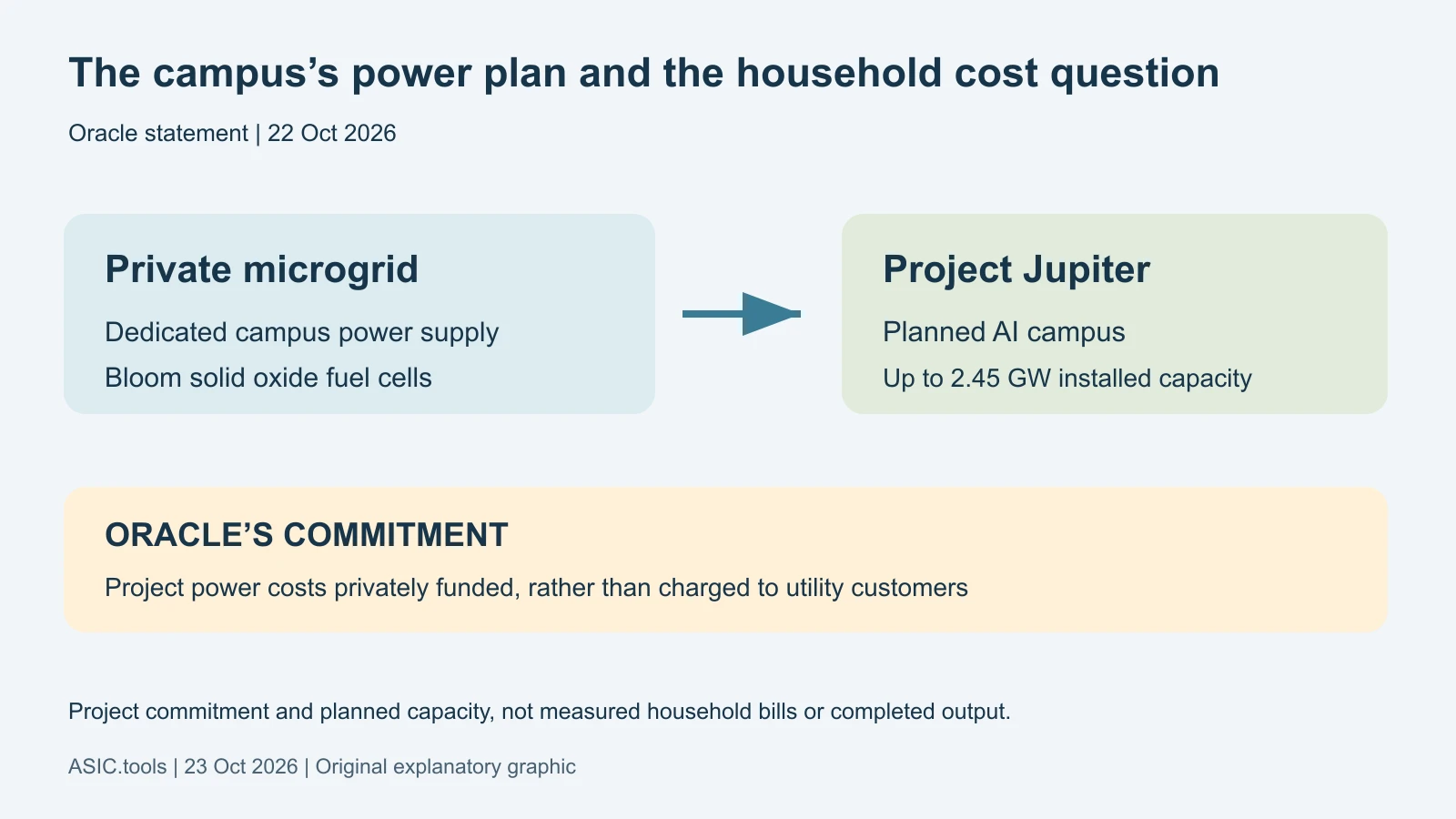
Oracle said on October 22 that Project Jupiter, its planned AI data-centre campus in New Mexico, will generate power through a private microgrid and will not require local utility customers to fund new generation, transmission or distribution infrastructure for the project. For households, that promise about cost allocation matters more than a headline about another very large computing site.
The company describes an updated energy plan, not a set of measured household bills after the entire campus has been operating. Its statement should therefore be read as a project commitment. It does not establish how much a particular resident’s next electricity bill will rise or fall.
What a private microgrid means here
A microgrid is a local electricity system serving a defined site or group of users. Oracle describes Project Jupiter’s supply as separate from the public grid for this large load. The important distinction is between buying all the site’s electricity through the ordinary utility network and developing a dedicated source for the campus.
Power still has to be produced, delivered and paid for. “Self-supplied” does not mean free energy. The economic question moves toward who finances the generating equipment, fuel and other project infrastructure, and which obligations stay with the developer rather than ordinary utility customers.
Fuel cells are not batteries charged in advance
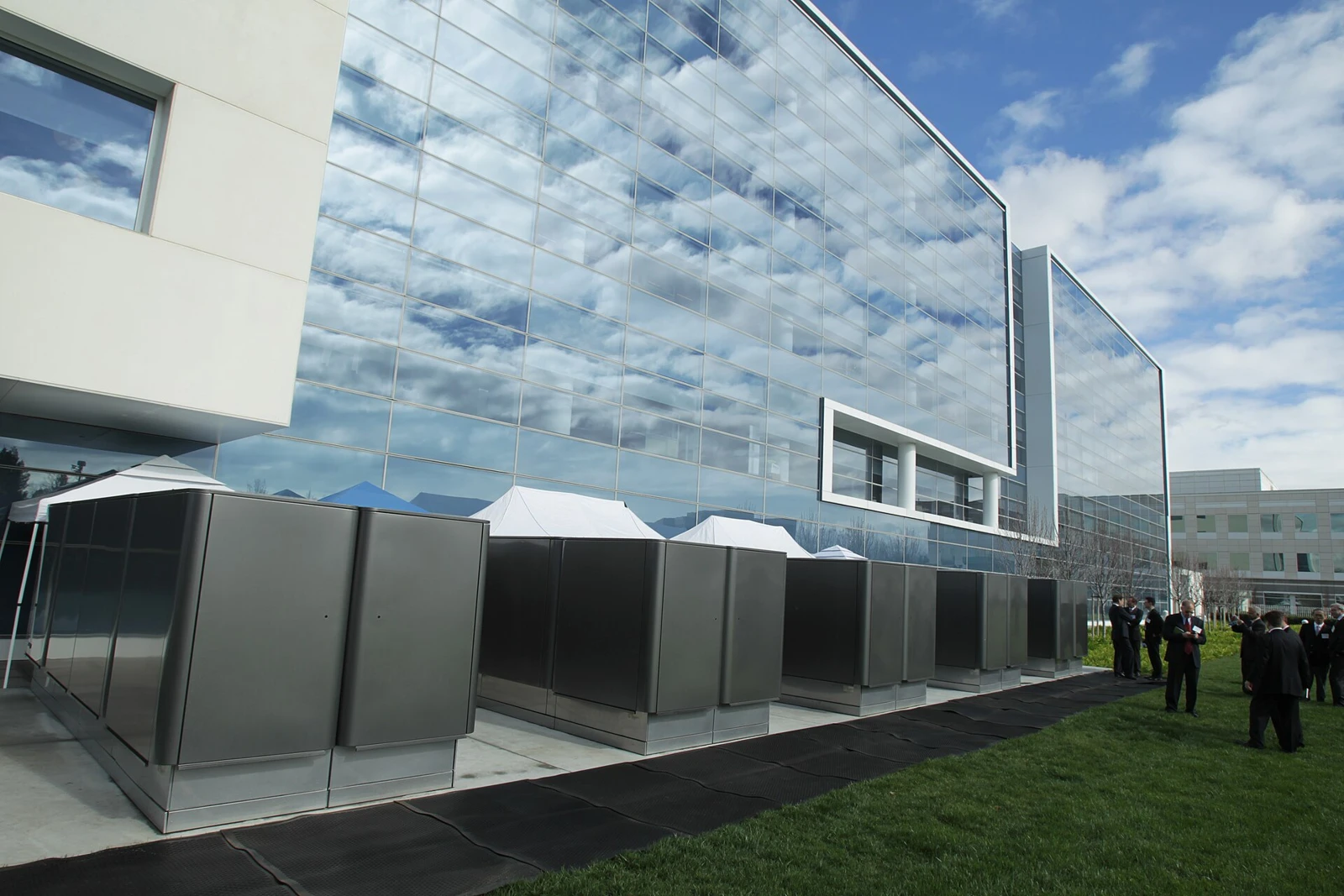
The revised design replaces the previously planned natural-gas turbines and diesel backup generators with solid oxide fuel cells made by Bloom Energy, according to Oracle. Fuel cells make electricity through an electrochemical process instead of the combustion process used by a turbine. They require a continuing fuel supply; they are not simply a battery that supplies stored electricity until empty.
Oracle says the change substantially reduces nitrogen oxide emissions, pollutants linked to regional ozone, compared with the earlier design. It also says fuel cells use less fuel and emit less carbon dioxide per unit of electricity than simple-cycle turbines. Those comparisons concern the stated technology and baseline, not a claim that the site has no emissions.
Lower nitrogen oxides and lower carbon dioxide are two separate comparisons. A technology can change local air pollutants and greenhouse-gas output differently. Keeping the pollutant and comparison baseline named helps a resident understand what “cleaner” actually describes, rather than treating it as one universal measure of environmental performance.
A capacity number is different from electricity already delivered
The announced microgrid is intended to provide up to 2.45 GW of installed capacity, equal to 2,450 MW. Gigawatts and megawatts measure the rate at which power can be supplied. Electricity produced over a period is energy, measured in units such as megawatt-hours. The two should not be substituted for each other.
“Up to” is also a limit in a project plan, not proof that every unit is operating at that output today. The campus is in Doña Ana County’s Paso del Norte border airshed, where Oracle highlights water scarcity as another reason for the design. The announcement’s low-water description is not a published operating water-meter record for the completed site.
A useful way to read future progress reports is to separate planned capacity, installed equipment and electricity actually delivered. Each is a different milestone. A household does the same distinction when comparing an appliance’s rated watts with the energy on its bill: the rating alone does not say how long it ran.
A promise about utility costs needs a matching scope
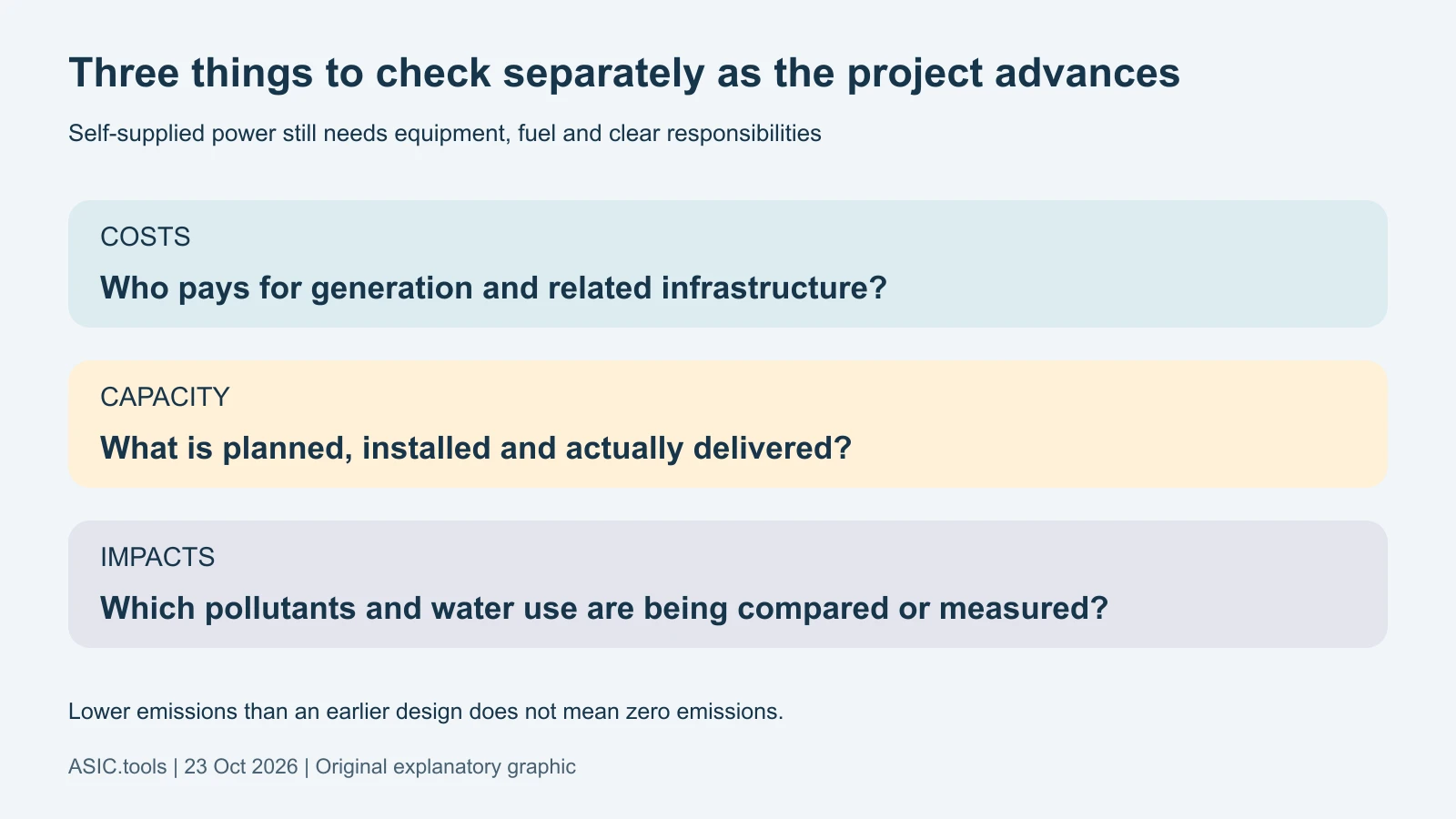
Oracle says project-related power costs will be privately funded and that the plan avoids requiring new public-grid infrastructure for the campus. That is a specific claim about this project. It should not be expanded into a guarantee that all regional energy prices, every household bill or every environmental impact will remain unchanged.
The release also quotes a lawyer who previously advised a project partner. His endorsement is a stated perspective from someone connected to the development, not an independent audit. More useful evidence as the plan advances will be the actual supply arrangements, approved project conditions and measured operation, rather than assuming the announcement settles every cost question.
Why this matters beyond one AI campus
AI sites and mining operations both need reliable electricity, even though their computing hardware and business models differ. When a large new customer appears, residents reasonably want to know whether they will pay for network upgrades and whether water or air-quality impacts are being addressed. Project Jupiter is an example of a proposed answer through dedicated supply.
For a small miner, the lesson is to separate the electricity tariff from the infrastructure that makes the tariff possible. A company’s private power plan does not offer that same price or capacity to a home user. The October 22 news is Oracle’s explanation of how it intends to serve its campus and allocate project power costs; the outcome still has to be demonstrated as the project proceeds.
For the ordinary customer, the most concrete follow-up is whether the final obligations match the promise about project-funded infrastructure. For the operator, reliable fuel and operating supply matter as well as the initial equipment. This keeps the discussion tied to responsibility and delivered service, without turning a campus plan into a retail electricity offer.
Source: Oracle ↗
Mining calculator ↗