A Melbourne data centre is waiting for more grid power: why the delay matters
Source report: 2026-10-21 · Editorial analysis published: 2026-10-22
NEXTDC pushes an M3 power increase into its 2028 financial year. The case shows why servers, buildings and usable electricity are different milestones.
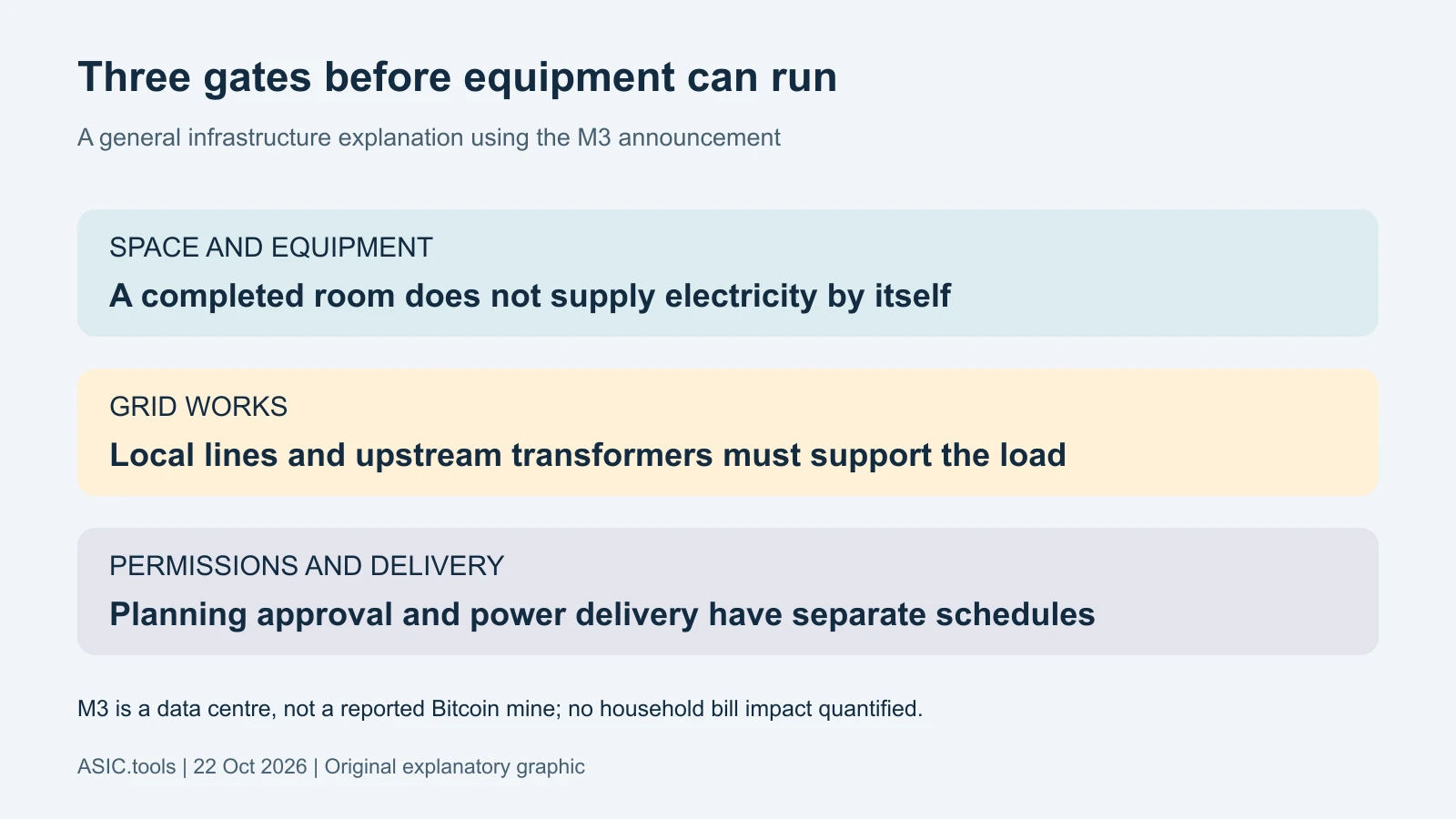
A building can be ready before its power supply
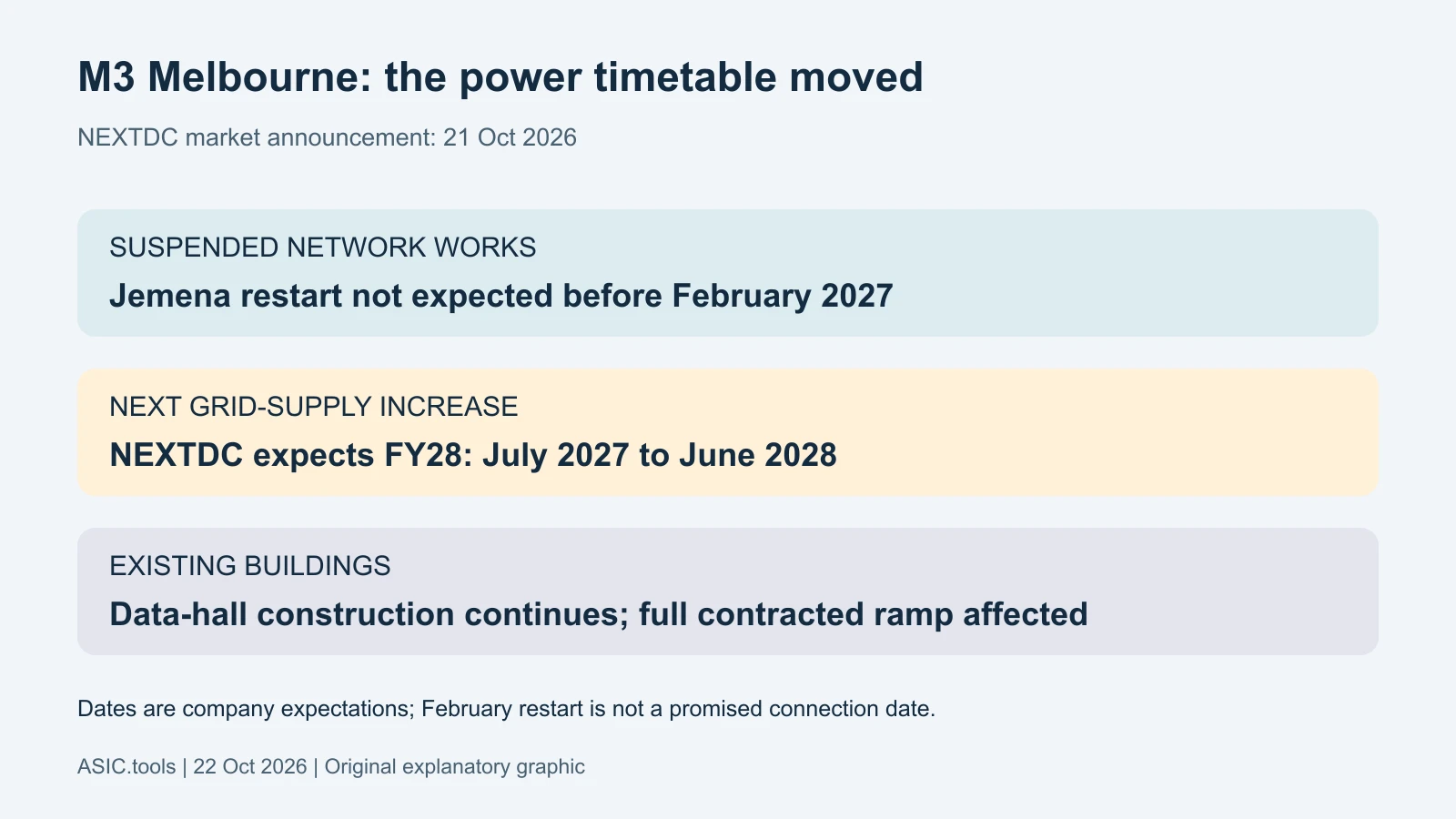
NEXTDC said in an October 21 market announcement that the next increase in grid electricity for its M3 Melbourne data centre is now expected in its 2028 financial year. The delay affects when contracted computing capacity can be delivered and billed. Construction inside existing buildings is continuing.
For anyone following large power-hungry facilities, including mining farms, the example is easy to understand: buying machines and building a room does not automatically provide the electrical connection needed to run them. M3 is a data-centre project; the announcement does not describe it as a Bitcoin mine.
The bottleneck is outside the server room
According to NEXTDC’s account of advice from distributor Jemena, parts of the required electricity-network works were suspended in September. The release cites safety and access issues connected with community opposition, and the absence of local council consent while further consultation takes place.
These are the issuer’s explanations of the network delay, rather than an independent assessment of residents’ concerns. NEXTDC says Jemena does not expect to restart the suspended works before February 2027. Restarting construction is itself different from completing the works and delivering more electricity.
Read the financial-year date carefully
NEXTDC’s financial year ends on June 30. Its FY28 therefore runs from July 2027 through June 2028, rather than meaning a promise to connect on January 1, 2028. The timing given for the first power increase is an expectation based on Jemena’s current indicative estimate.
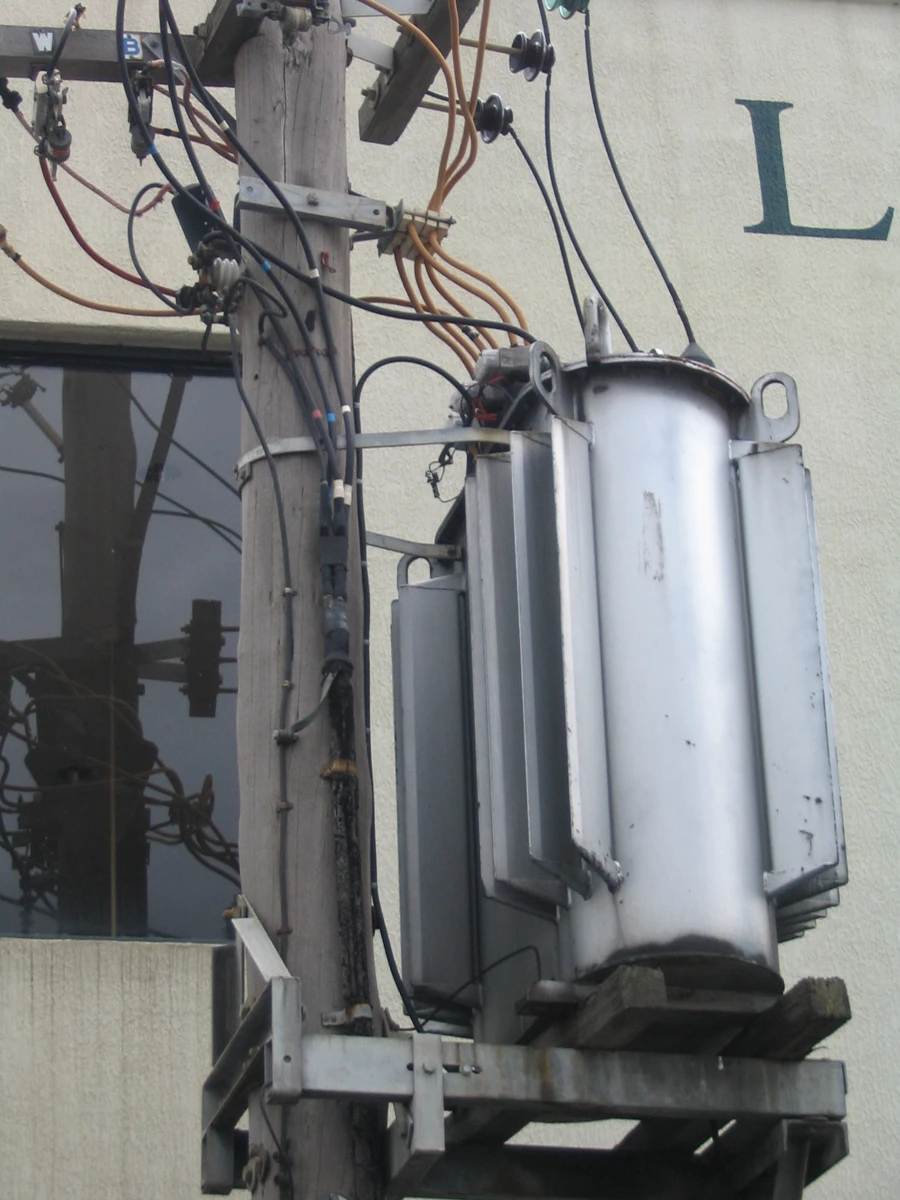
Later increases also depend on upstream transmission work, including new transformers at Brooklyn Terminal Station. A transformer changes electricity voltage so power can be moved and used at the required level. Completing a local cable project does not by itself remove every upstream limitation.
Why the company cut its forecast
NEXTDC lowered its FY27 net-revenue forecast to A$475–500 million from A$615–640 million. Here net revenue is the company’s measure of total revenue less direct costs, not net profit. It excluded the affected M3 customer contracts because it cannot reliably estimate their contribution under the revised power schedule.
Those exclusions include some capacity already being billed: the existing supply cannot be relied on to support the full contracted ramp-up. The affected capacity remains contracted, subject to customer rights. That is more precise than saying the whole site has no power or that every customer has cancelled.
Planning permission is a separate gate
The proposed M3 Stages 6 and 7 also require a planning decision. NEXTDC now expects that decision in 2027, after Victoria’s November 28 election and the caretaker period. Approval has not been presented as already granted, and a planning permit would not complete the electricity works by itself.
The company is prioritising near-term contracted capacity and has put new development projects and land purchases on hold. Its dates and financial ranges remain forecasts. The release also says service credits payable under affected contracts could take underlying earnings below the revised guidance.
What this tells a miner or a neighbour
A useful checklist for a proposed mining site starts with deliverable grid capacity, the connection timetable and approvals, then asks what can actually run at each stage. An electricity purchase contract and an equipment order are not substitutes for completed network works. Interruptions and delays need to appear in the operating scenario.
For nearby households, this announcement confirms the importance of consultation and consent, not a quantified change to their next electricity bill. No household saving, price increase or national power shortage can be calculated from it alone. The next useful evidence is a dated network-work update and a revised delivery schedule, rather than another photograph of a finished building.
Source: NEXTDC ↗
Mining calculator ↗