Google backs more Arkansas solar and batteries: who pays for the electricity?
Source report: 2026-10-19 · Editorial analysis published: 2026-10-21
Entergy’s October 19 plan adds storage, solar purchases and grid work for Google’s expansion. The promised customer benefit is spread over twenty years and still depends on regulatory approval.
A data-centre expansion with an electricity bill attached
Entergy Arkansas announced a second phase of its partnership serving Google’s West Memphis campus on October 19. The proposal combines solar electricity purchases, large batteries and grid upgrades. Its broadest question is familiar to households and miners alike: when a very large new customer needs more power, who pays to build the equipment and wires that serve it?
The utility says Google will cover the full cost of the additional resources over a twenty-year contract and contribute toward shared system costs. It describes approximately US$600 million in planned investment and a power purchase agreement, both covered by Google. These are terms and expected benefits announced by the companies. The expansion still needs Arkansas Public Service Commission approval; the expected service date is 2028, pending that review.
Two batteries store electricity rather than create it
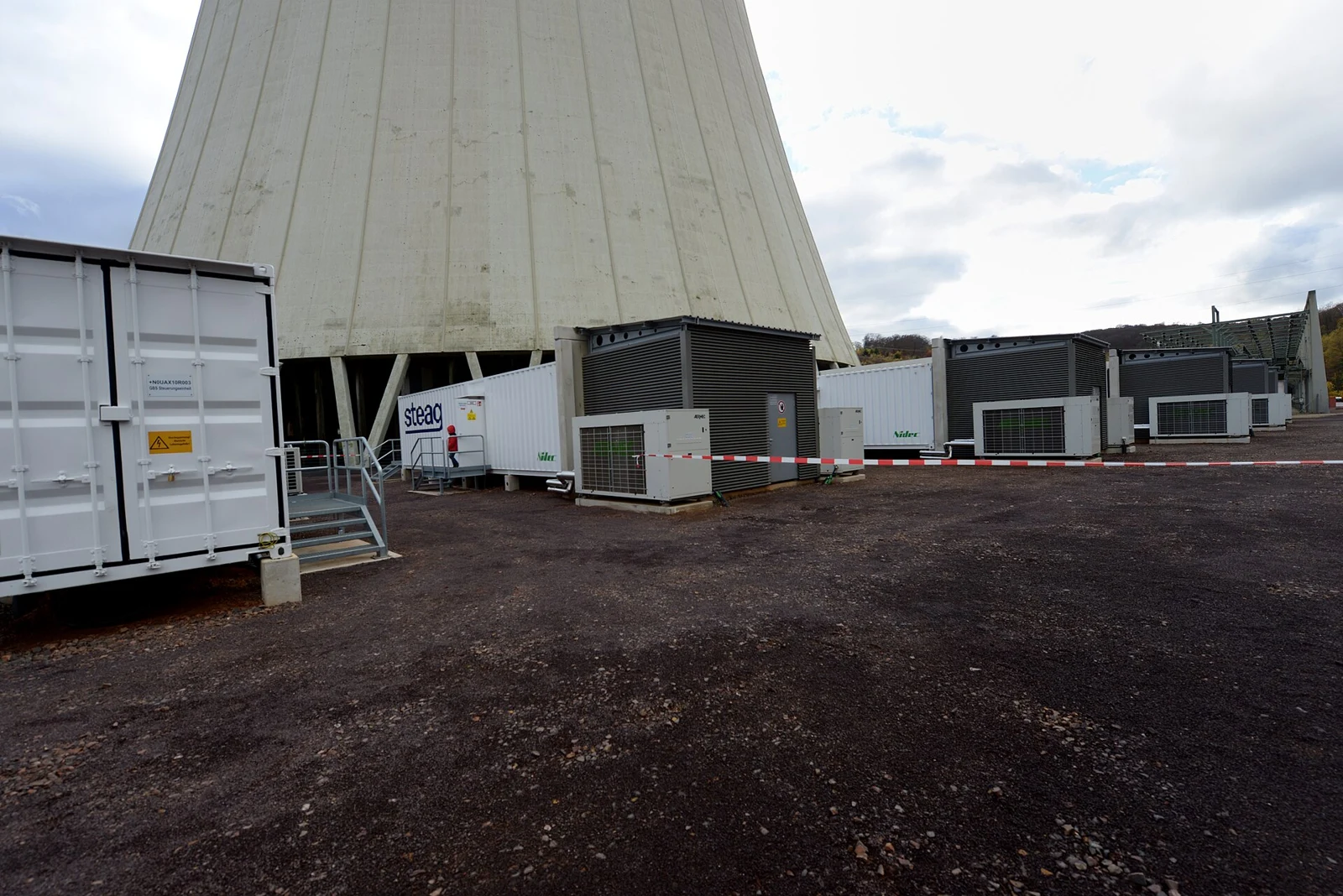
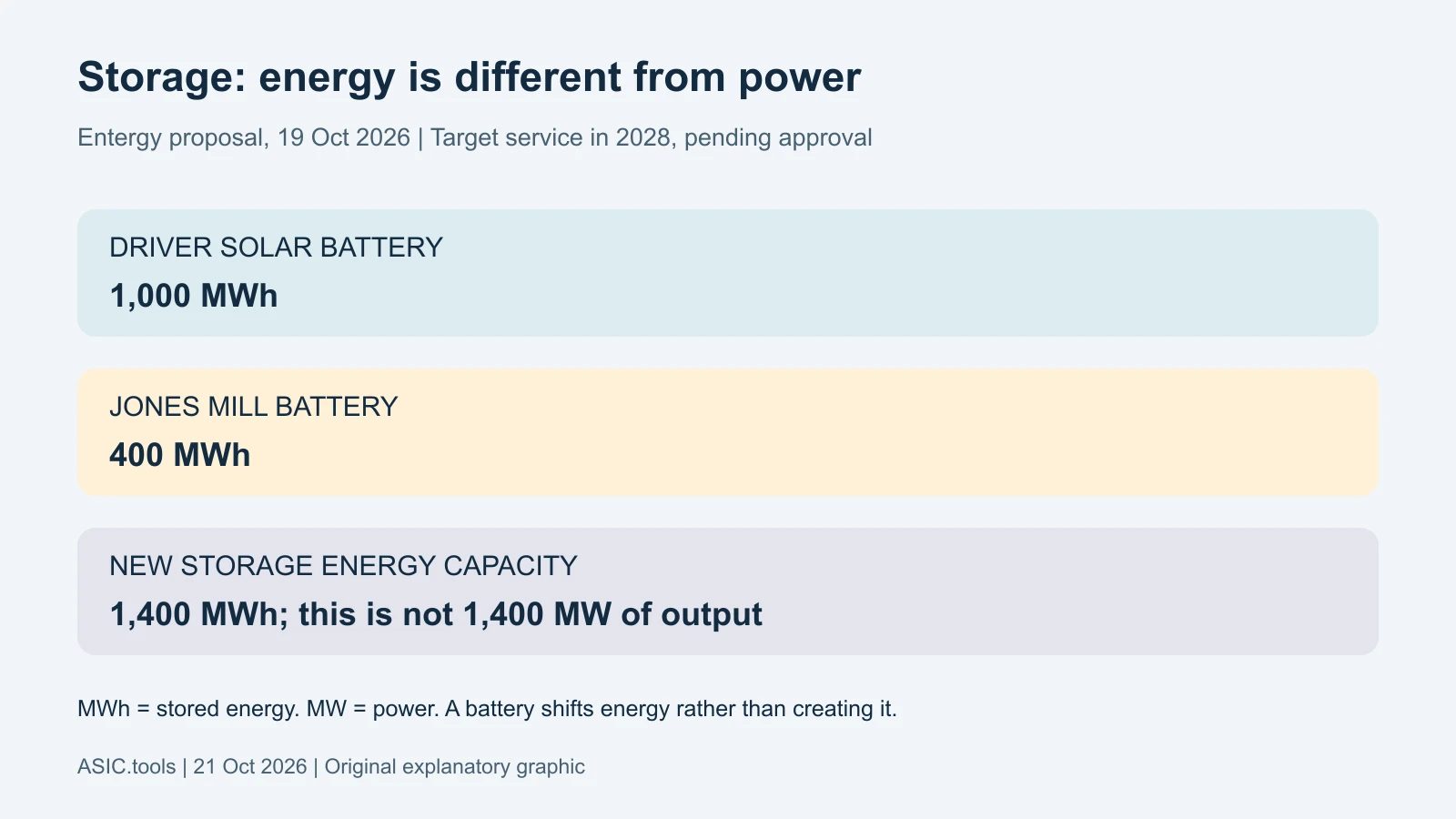
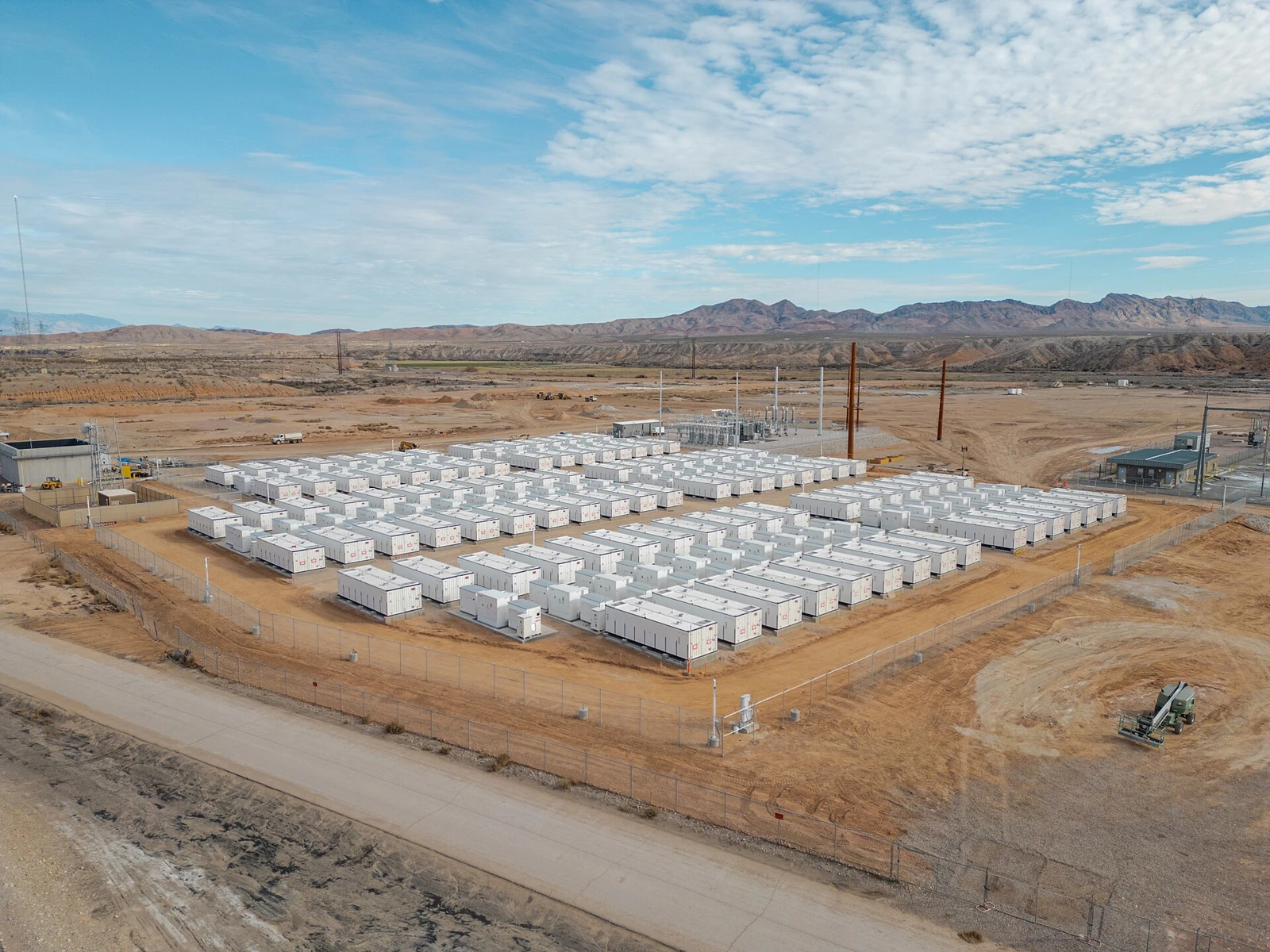
The new battery plans are 1,000 MWh at Driver Solar near Osceola and 400 MWh at Jones Mill near Hot Springs, with both expected online in 2028. Together they represent 1,400 megawatt-hours of energy storage. A megawatt-hour measures an amount of electricity. A megawatt measures power, or the rate at which electricity is produced or used. The similar names are easy to mix up, but the two figures answer different questions.
Think of stored energy as the water held in a tank, and power as how quickly water can flow through a pipe. A battery can shift electricity from a time when it is available to a time when it is needed, with losses along the way. Its MWh rating alone does not tell us its discharge power or exactly how many hours it will run a campus. The announcement supplies storage amounts, so we do not invent a battery output rate or claim uninterrupted supply from those numbers.
Solar contracts and wires complete the picture
The plan includes a purchase agreement for 440 MW of alternating-current solar capacity at the Big Island facility under construction in Mississippi County, Arkansas. A power purchase agreement is a contract to buy electricity under agreed terms; it is not the same thing as a new household retail tariff. Mississippi County is in Arkansas here, rather than a claim that the solar plant is in the neighbouring state of Mississippi.
Entergy also lists expansion of the Galet substation and two new 230 kV transmission lines. A substation helps connect and manage power on the grid, while transmission lines move it between locations. New generation alone cannot solve a bottleneck in the wires serving a site. Combining generation, storage and connections is what makes this announcement more substantial than simply attaching a solar-capacity number to a data-centre project.
The solar MW figure is also a capacity rating, not a promise of that output through every hour of the day. Solar generation varies with conditions, while batteries and network connections perform different tasks. A project budget alone cannot tell a reader the eventual retail price per kilowatt-hour.
What the savings headline does and does not mean
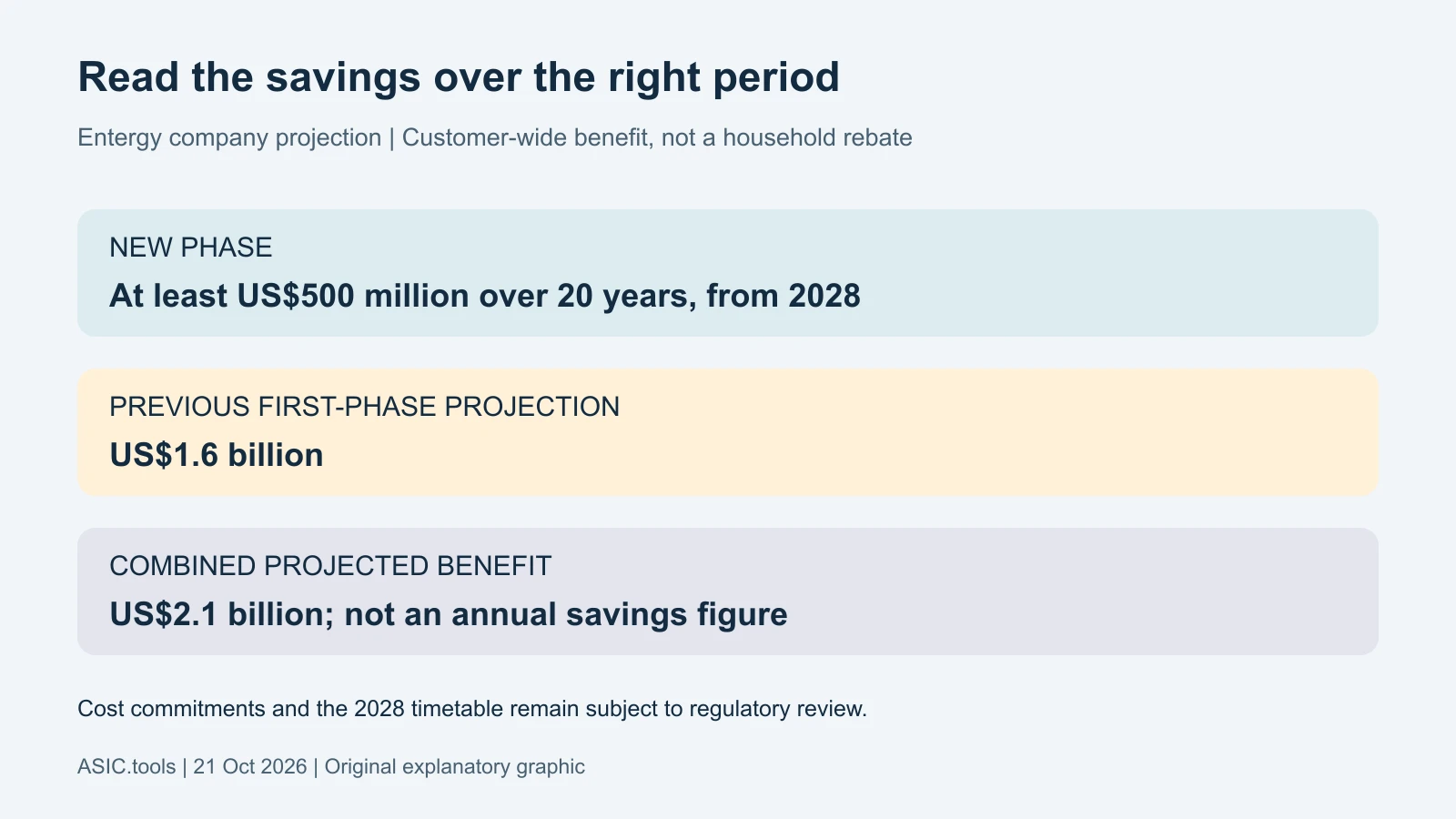
Entergy expects at least US$500 million in additional customer savings starting in 2028 and extending over twenty years. That is the expected benefit of the new phase across customers over the contract period. It is not US$500 million every year, not a payment to each household and not a confirmed reduction on the next electricity bill. The utility describes bills being lower than they otherwise would be, which is a comparison with a future without the agreement.
Its larger US$2.1 billion benefit figure combines this phase with a previously announced US$1.6 billion from the first phase. These are not three separate sums to add together. The stated mechanism is that Google pays for its required resources and carries part of the system’s shared fixed costs. Fixed costs include infrastructure that must be maintained even when a particular customer uses less energy. Spreading those costs can help other customers without guaranteeing their nominal bills will fall from today’s level.
Why the approval process matters
The company says the new resources will not be charged through the Generating Arkansas Jobs Act Rider, a specific billing mechanism, and that regulators will review the contract. This is the cost-allocation arrangement described in the release, not an independent finding that every future risk has already been eliminated. Approval and the eventual terms will matter as much as the initial spending headline when judging the effect on ordinary customers.
There is also a wider portfolio in the announcement: combining these resources with Arkansas Cypress Solar and Battery would produce more than 1,000 MW of solar and 2,800 MWh of storage. Those are combined figures that already include the new resources; the new 1,400 MWh should not be added again. Steel River Solar is described under a separate arrangement. Keeping project boundaries clear avoids making the newest phase appear much larger than it is.
The connection to mining and home electricity
A data centre and a mining farm do different computing work, but both need a dependable electricity connection. For a miner, the useful lesson is to ask what sits behind a quoted power price: energy itself, grid access, connection costs, capacity and any agreed operating restrictions. A battery is one tool for managing timing; it does not make the underlying electricity free. An announced corporate investment also does not become a new local tariff for a reader elsewhere.
For households, the issue to follow is the approved division of costs and whether the promised shared-system benefit appears over time. For miners, it is whether the actual supply contract and operating costs support their calculation. Google and Entergy have announced a plan that addresses both new resources and responsibility for paying for them. The practical next milestones are regulatory review, construction and service, rather than assuming the capacity or the projected savings already exist today.
Source: Entergy Arkansas ↗
Mining calculator ↗