A British plan targets lower electricity bills: what it could mean for home mining
Source report: 2026-10-23 · Editorial analysis published: 2026-10-25
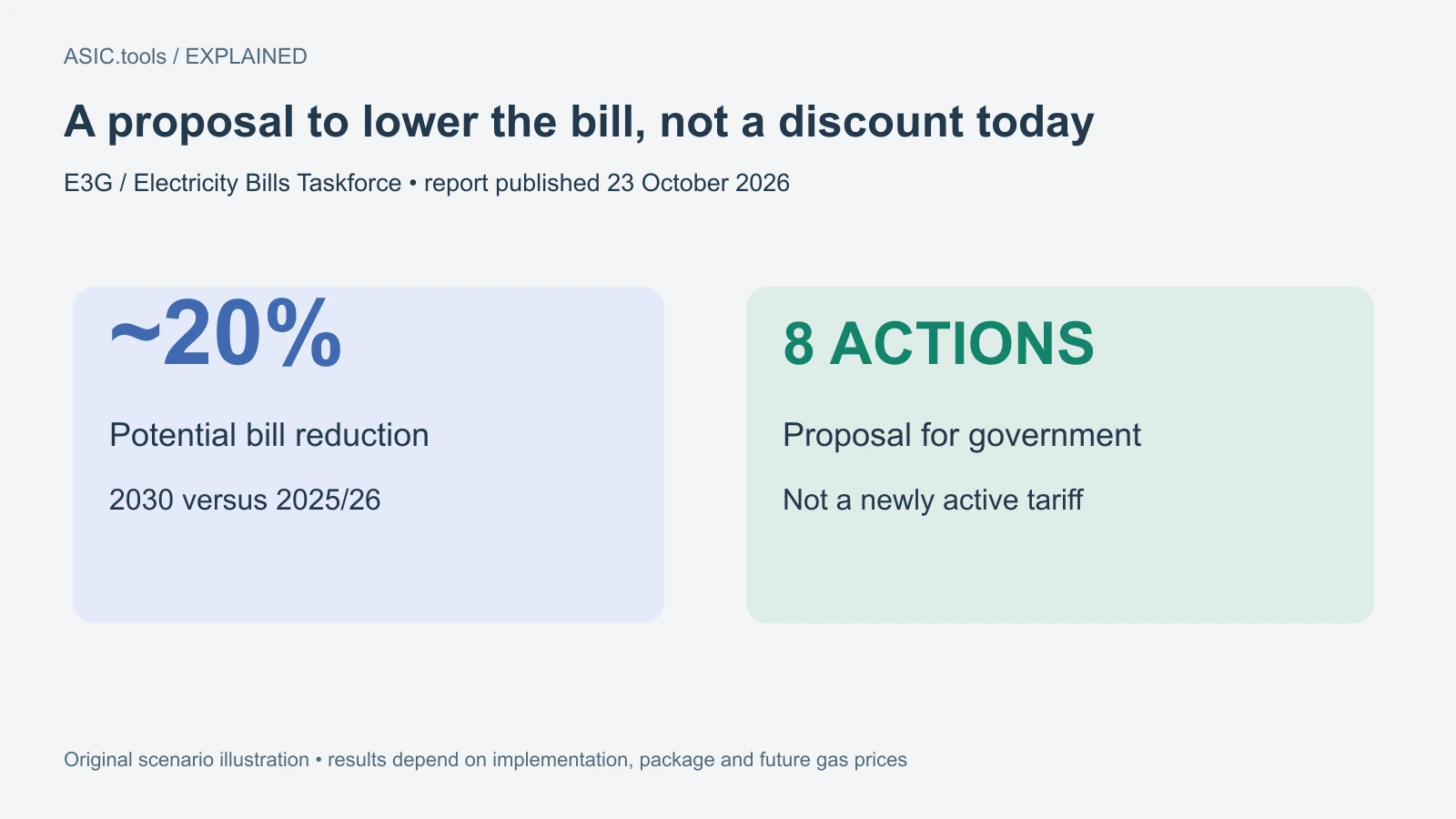
E3G’s October 23 report sets out eight reforms that could cut bills by roughly 20% by 2030 against 2025/26 levels. It is a policy proposal with costs and conditions, not a new electricity tariff.
A new proposal puts the whole bill under scrutiny
E3G published a report on October 23 proposing eight reforms to lower electricity bills in Great Britain. The Electricity Bills Taskforce argues that a full package could bring household and business costs down by roughly 20% by 2030 compared with 2025/26 levels. It is asking government to act; it has not introduced a new tariff for customers.
The report draws on Cornwall Insight data and further Taskforce analysis. Its programme covers policy levies, energy debt, network investment, system operation, flexible demand, wholesale-market profits, targeted support and government coordination. The point is to address several parts of a bill together.
For a household running a miner, the connection is straightforward: the machine consumes electricity under the actual supply contract. A debate about reducing that cost is relevant, but a forecast saving cannot be entered into today’s mining calculation as an already available discount.
Moving levies changes who pays
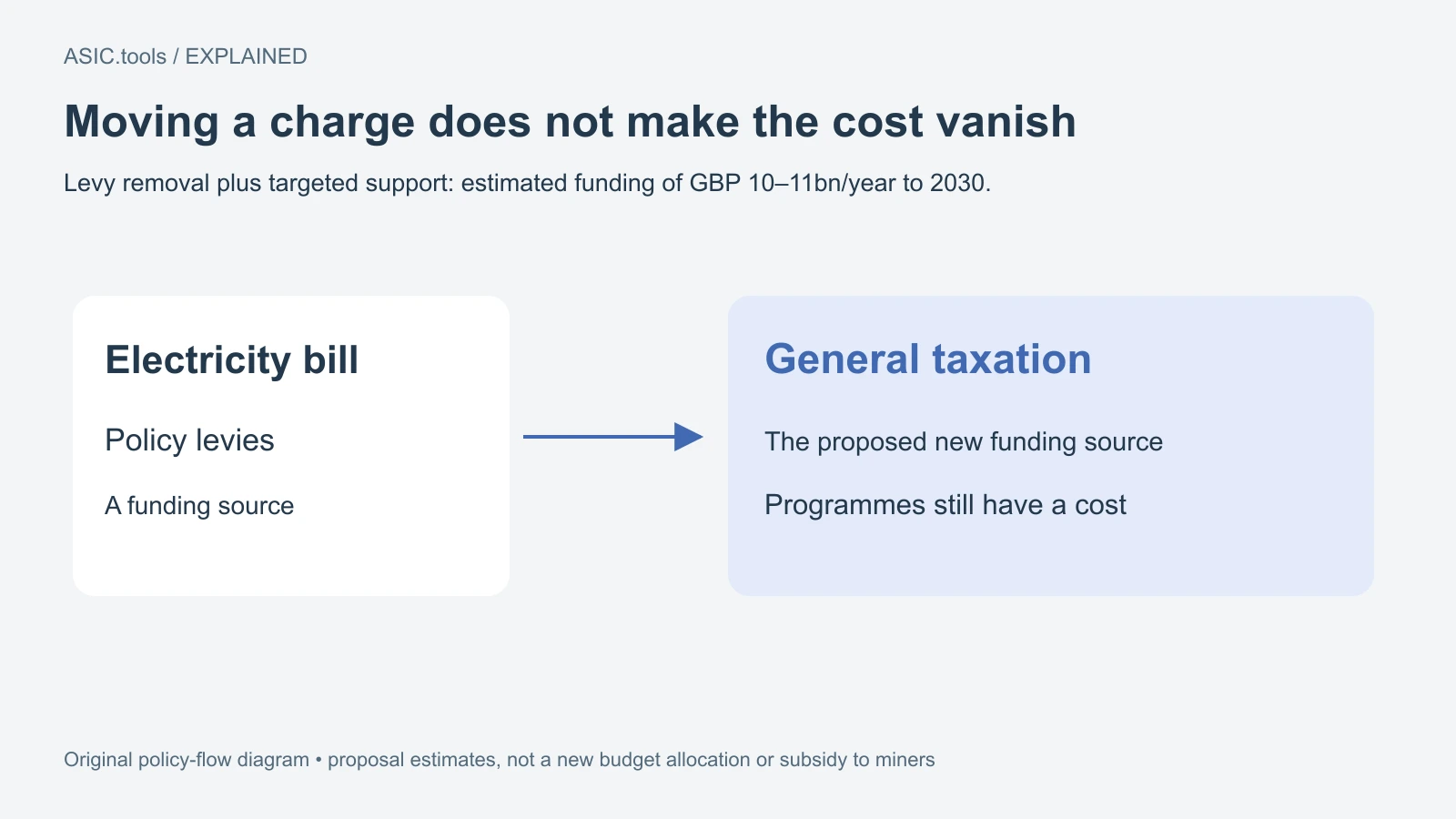
One central recommendation is to move policy levies from electricity bills to general taxation. A levy is an added charge that helps fund a particular programme. Removing it from an electricity bill does not mean that the programme suddenly costs nothing; the proposal changes how it is funded.
The report says levy removal and better targeted support are the two actions that could reduce bills in the short term. Together those measures would require roughly £10–11 billion a year until 2030, with costs then declining. That is the authors’ estimated funding requirement, not money already allocated by a new government decision.
Other reforms take longer. Better-value grid construction and changes to wholesale pricing involve investment, regulation and implementation. A recommendation supported by a broad coalition can influence policy without automatically changing the unit price printed on a customer’s next bill.
Read the percentage with its baseline
The report compares the overall roughly 20% reduction with 2025/26 prices. Its projections include inflation, and the authors say results depend on future gas prices and the exact package chosen. A percentage without that starting point can make a scenario look more certain or immediate than it is.
The publication also discusses savings against a future baseline in which no extra reforms occur. That is a different comparison. Lower than a projected 2030 bill and lower than today’s bill do not mean the same thing, even when both describe the same proposed package.
The report’s flexibility estimate is already distributed across other saving areas. Adding it again to every other headline number would double-count part of the benefit. The practical lesson is to use the combined scenario on its own terms rather than assemble a larger discount from isolated figures.
Flexible consumption is useful only with the right terms
Consumer flexibility means shifting or reducing electricity use when power is scarce or expensive, and using more when it is abundant and cheaper. The report sees this as a way to lower system costs. For a customer, the benefit also depends on the meter, tariff and services actually available.
A miner that can pause is a controllable load, but stopping it also reduces the time spent mining. A sensible comparison includes both avoided electricity charges and forgone revenue. A cheap wholesale hour is not automatically the retail price paid by every household.
Before changing an operating schedule, read the contract’s unit charges, time bands and standing charges. A standing charge is a daily fixed amount separate from electricity consumption. The report does not create a universal reward for switching off a home miner or guarantee that a specific device becomes profitable.
A policy route, not a new profitability preset
The report is significant because it connects household affordability with how the electricity system is financed and operated. That matters beyond mining: the same bill also pays for lighting, appliances and other uses. The proposed relief is not a special subsidy for crypto equipment.
Great Britain is the report’s geographic scope. Its modelled household and business results should not be transferred directly to a Ukrainian bill, another country’s market or one unusual high-consumption installation. An individual outcome depends on actual use and the rules eventually adopted.
For now, the practical change is a detailed new policy proposal and a framework for judging future decisions. Keep current tariffs in operating budgets, and update the calculation when a supplier or government confirms a measure that genuinely applies to the account.
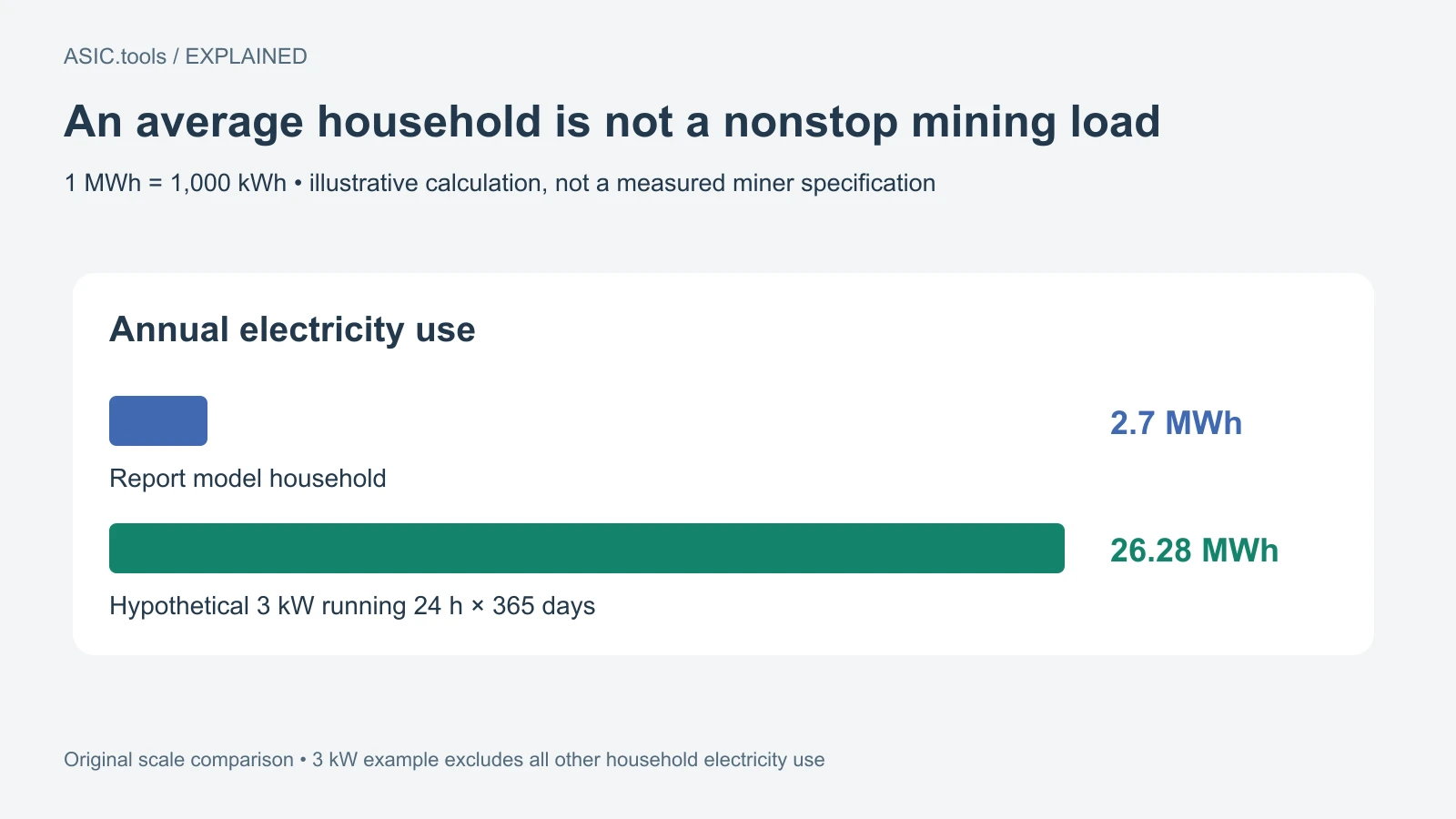
The report models a typical household using 2.7 MWh of electricity a year:2,700 kWh. For scale, a hypothetical constant 3 kW load running 24 hours for 365 days uses 26,280 kWh, or 26.28 MWh, before any other household use. That is not a real-device forecast; it shows why an average-home saving cannot simply be copied onto a continuously operating mining installation.
Source: E3G / Electricity Bills Taskforce ↗ · Full report and methodology ↗ · Executive summary ↗
Mining calculator ↗